
 English
 简体中文
简体中文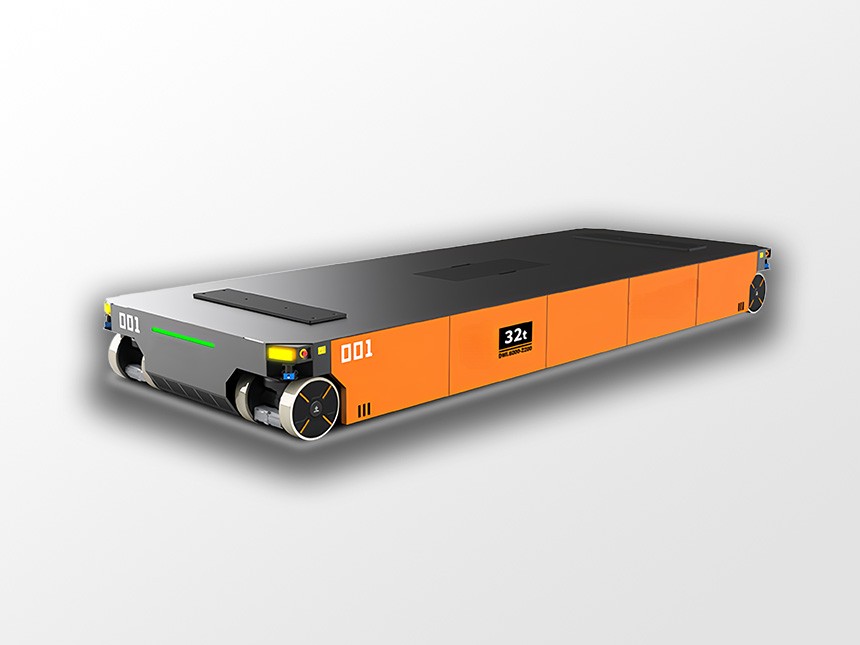
Why Remote-Controlled Transfer Carts Deliver Measurable ROI
Industrial facilities that still rely on manual towing trains, forklift shuttling, or fixed conveyor loops are leaving efficiency and safety performance on the table. Remote-controlled transfer carts—battery-powered AGV platforms operated via handheld pendant, radio remote, or Wi-Fi-connected tablet—solve the core economic problem of point-to-point material handling: high labor cost, low route flexibility, and inconsistent throughput. This article breaks down where the return on investment actually comes from, what the typical payback timeline looks like, and how to structure a business case that finance teams will approve.
The Operational Challenge: Hidden Costs of Manual Transfer
Traditional material transfer in manufacturing and warehouse environments carries costs that rarely appear as line items. Forklift operators represent one of the highest-turnover roles in industrial logistics; every replacement cycle costs 16–20% of annual salary in recruiting, training, and productivity loss. Beyond labor, manual transfer creates bottlenecks during shift changes, introduces product damage risk from operator fatigue, and limits the ability to scale operations without proportional headcount increases.
Fixed conveyor systems address consistency but introduce their own constraints: high capital expense, long installation lead times, and zero flexibility when production layouts change. For facilities running mixed-model production or frequent product line changes, a rigid conveyor is a long-term liability.
The Solution: Remote-Controlled Transfer Cart Systems
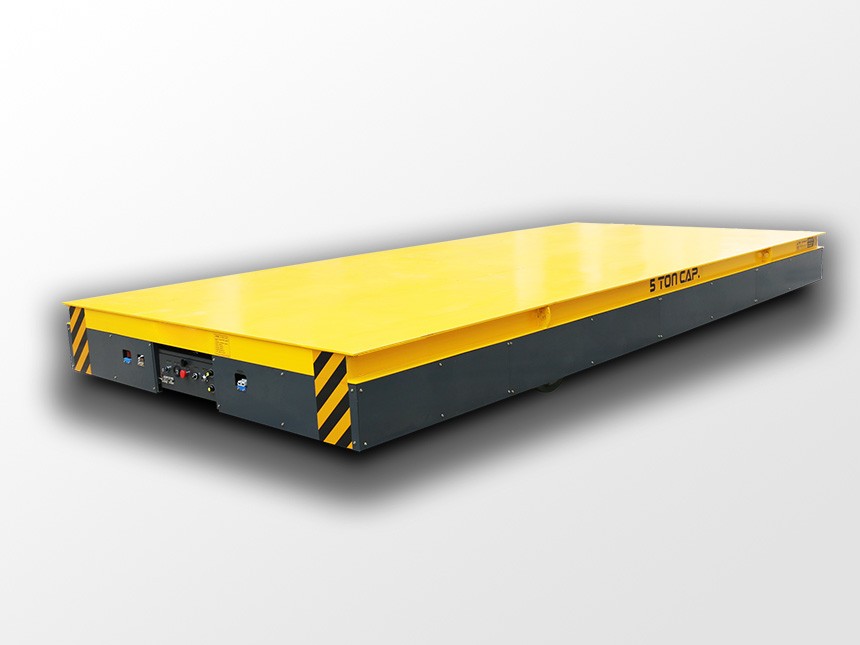
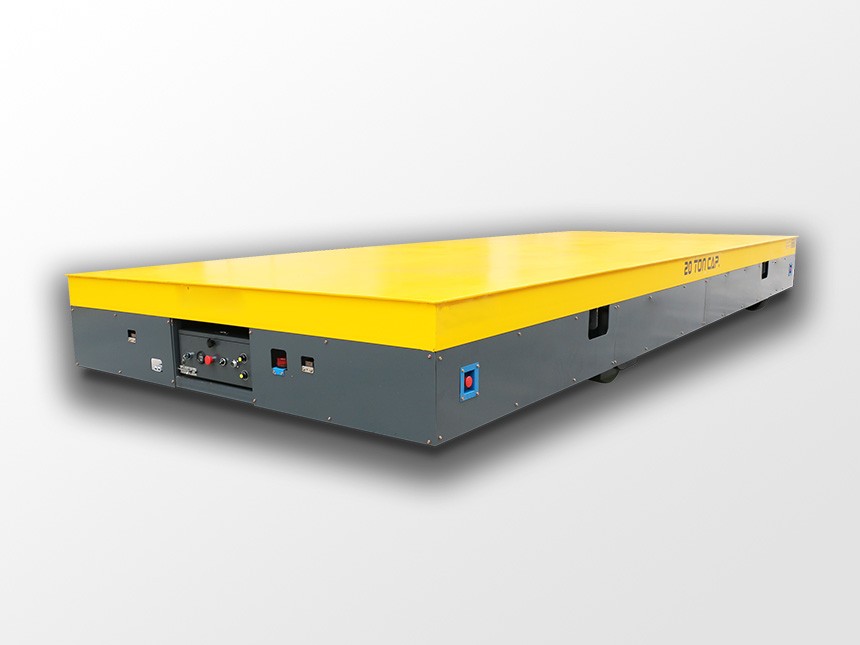
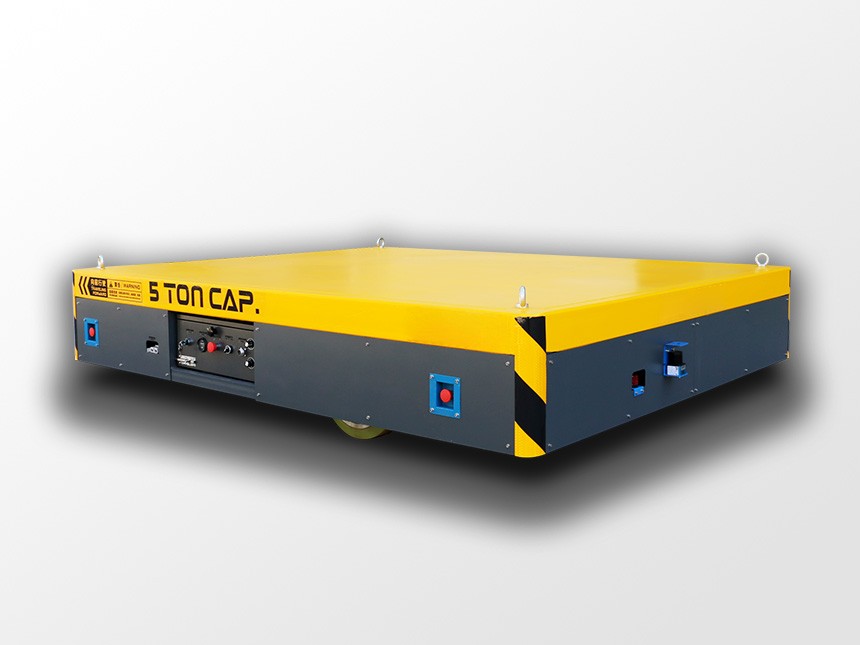
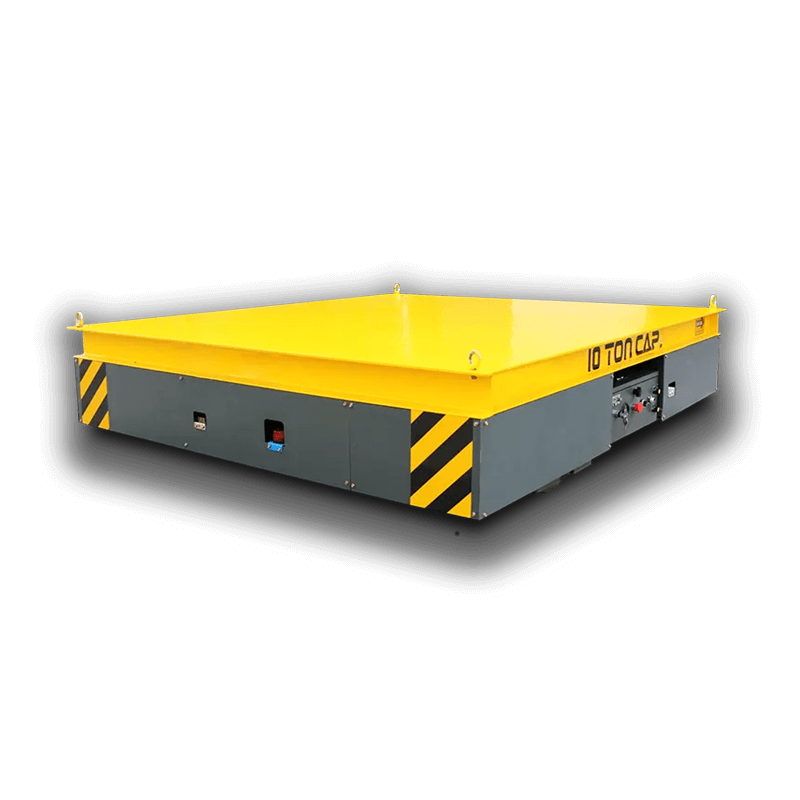
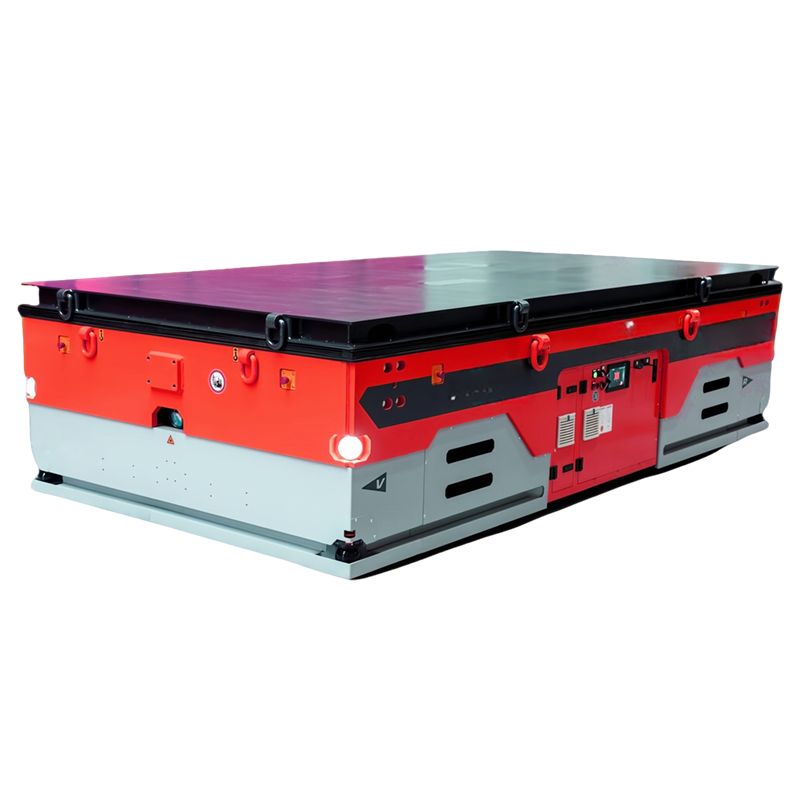
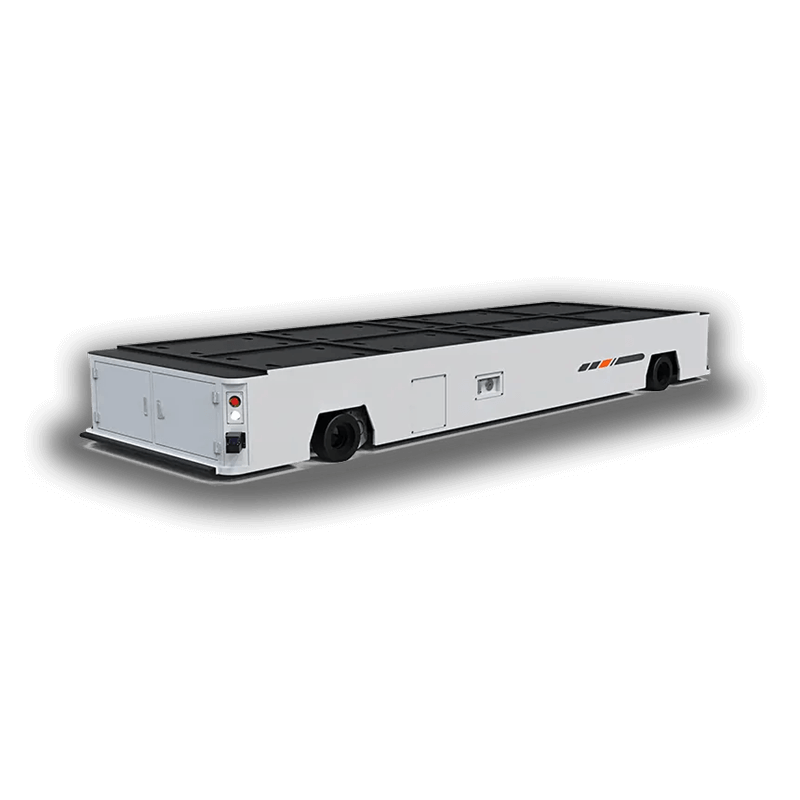
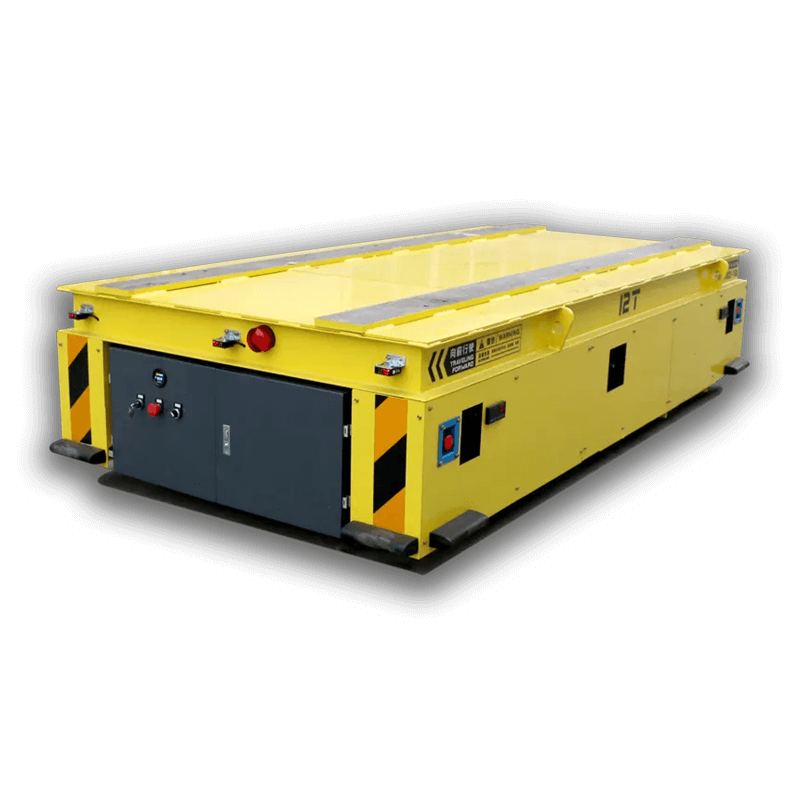
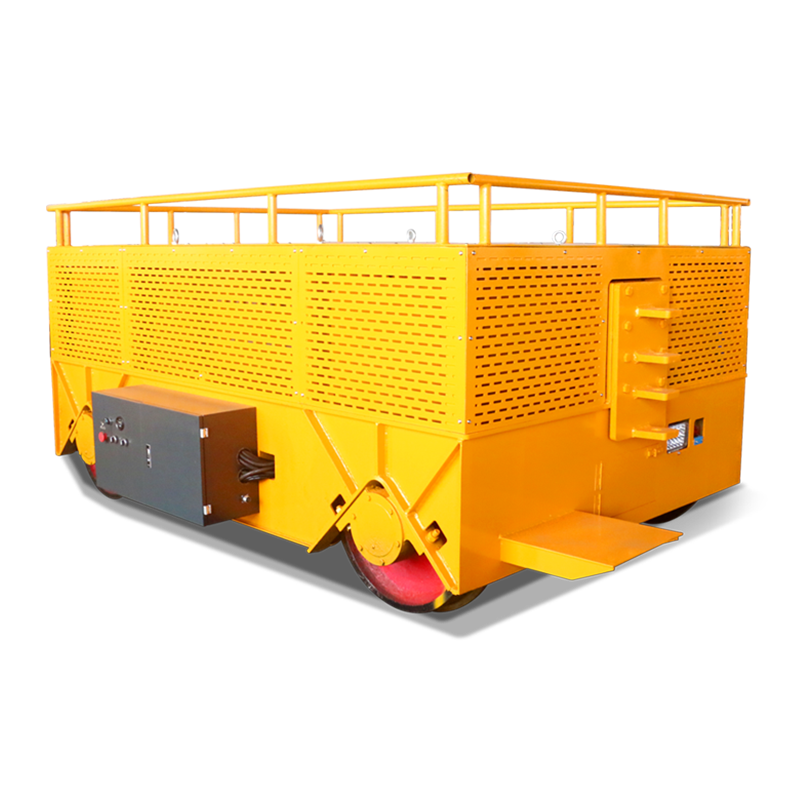
A remote-controlled transfer cart replaces repetitive point-to-point hauling with an AGV platform that operators command on demand. The cart runs on rechargeable batteries (typically lead-acid or lithium-ion), follows predefined routes via magnetic tape, vision markers, or laser navigation, and stops automatically when obstacles are detected. Key features that drive ROI include:
• Operator agnosticism — Any trained floor worker can summon and dispatch a cart, removing specialization bottlenecks.
• Route reprogramming — Layout changes take hours, not weeks; no conduit digging or conveyor restructuring.
• Collision avoidance — Integrated safety scanners bring carts to a controlled stop within milliseconds, reducing product damage and insurance exposure.
• Run-time logging — Digital trip records feed into MES or WMS systems, providing the data foundation for continuous improvement.
Implementation: What the Deployment Actually Involves
One of the biggest advantages of remote-controlled transfer carts over fully autonomous AGV systems is deployment speed. A typical phased implementation follows this path:
Phase 1 — Route mapping (1–2 weeks): Engineers survey the facility floor, identify high-frequency transfer paths, and define cart stops. Navigation method is selected based on floor conditions: magnetic tape for stable indoor environments, laser navigation for areas requiring frequent reconfiguration.
Phase 2 — Pilot run (2–4 weeks): One or two carts are deployed on the highest-volume route. Operators receive pendant or remote training—typically a 4-hour familiarization session. Data collection begins immediately: trip frequency, cycle time, idle time, and fault events.
Phase 3 — Fleet scaling (4–8 weeks): Additional carts are added based on pilot data. Dispatch logic is configured—either fixed schedule or on-demand triggered by barcode/RFID at pickup points. Integration with existing ERP or MES is completed via API or middleware.
Phase 4 — Optimization (ongoing): Route efficiency is tuned based on accumulated run data. Fast-charge stations are positioned to minimize cart downtime during multi-shift operations.
Results: Quantifying the Return
Facilities that have deployed remote-controlled transfer cart systems report consistent improvement across three metrics:
Labor cost reduction: 25–45%. In a 3-shift manufacturing plant running 15+ transfer trips per shift, replacing dedicated driver hours with floor operators who summon carts on demand cuts direct labor spend significantly. Operators spend less time walking materials and more time on value-added assembly tasks.
Throughput improvement: 20–35%. Automated carts run consistent cycle times without fatigue-related slowdowns. In facilities where transfer was previously a shift-change bottleneck, parallel cart dispatching allows continuous production flow.
Damage and incident reduction: 40–60%. AGV collision avoidance systems eliminate the product damage and floor incidents caused by forklift misuse. For facilities handling precision components or hazardous materials, this translates directly to lower insurance premiums and fewer disruption events.
On a representative 5-cart deployment with a $180,000 total capital investment (carts, infrastructure, integration), a mid-size facility typically achieves full payback within 18–30 months, depending on labor rates, operating hours, and existing transfer frequency.
Key Takeaways: Building a Business Case That Holds Up
When presenting a remote-controlled transfer cart investment to finance, frame it around fully loaded labor cost—not just base salary. Include forklift operator turnover costs, product damage reserve allocations, and overtime premiums for surge transfer needs. The comparison should be against the true cost of status quo, not an idealized version of it.
Start with a single high-frequency route. Let the pilot data—actual cycle times, actual labor hours recovered, actual incident reduction—drive the expansion decision. This approach minimizes upfront risk and gives operations teams time to build competence before scaling.
Finally, plan for integration from day one. The ROI accelerates significantly when cart run-time data flows into the facility's MES or WMS, enabling load balancing across shifts and data-driven route optimization. A cart that just runs back and forth is useful; a cart that reports its performance is transformative.
Conclusion
Remote-controlled transfer carts represent a pragmatic entry point into automated material handling—less complex and less expensive than full conveyor systems or fully autonomous AMRs, yet delivering measurable, quantifiable returns across labor efficiency, throughput, and safety. For operations managers evaluating their next material handling investment, the financial case is clear and the deployment path is well-proven. The question is not whether the ROI exists—it is how quickly a facility can start capturing it.