
 English
 简体中文
简体中文
What Reliability Really Means for Electric Carts
When you're running a factory or warehouse, an electric cart that breaks down isn't just inconvenient — it stops production. Reliability isn't about fancy features. It's about the cart doing its job, day after day, without surprise failures. Engineers and operations managers need to look past the brochure and understand what actually makes these machines hold up under real industrial stress.
Here's the thing: most electric carts look similar on the outside. The differences that matter are hidden in the drive system, the battery setup, the frame construction, and the control electronics. Get these right, and the cart runs for years. Get them wrong, and you're looking at downtime, repair bills, and frustrated operators.
Drive System Durability
The drive system is where most failures happen. It's also the most expensive component to fix. A reliable drive starts with motor selection. Brushless DC motors and AC induction motors both work, but they fail differently. Brushless motors have fewer wearing parts — no brushes to replace — which means longer service intervals. AC motors are tougher against overloads and temperature swings.
Gearboxes are another weak point. Planetary gearboxes handle shock loads better than worm drives, especially in heavy-duty applications. The key spec to check isn't just torque rating — it's the service factor. A gearbox rated for 1.5x continuous torque will outlast one rated at exactly the load limit. It's worth paying for the margin.
Wheel design matters more than people think. Polyurethane wheels grip well and absorb vibration, but they wear faster on rough floors. Cast iron wheels last longer but transmit more shock to the drivetrain. For reliability, match the wheel material to your floor condition — and check that the wheel bearings are sealed and rated for the load.
Battery Performance and Longevity
Batteries are the heart of any electric cart, and they're often the first thing to cause problems. Lead-acid batteries are cheap upfront but need regular maintenance — water topping, equalization charging, and temperature monitoring. Skip any of this, and you'll get sulfation, capacity loss, and early failure.
Lithium iron phosphate (LiFePO4) batteries are becoming the standard for industrial carts. They last 2,000–5,000 cycles versus 500–1,000 for lead-acid. They don't need watering. They charge faster. The downside? Upfront cost is higher, and they need a battery management system (BMS) to prevent overcharging and thermal runaway. A good BMS isn't optional — it's what makes lithium safe and reliable.
Temperature is the silent killer of batteries. Every 10°C above 25°C roughly halves battery life. If your cart runs in a hot foundry or cold storage warehouse, the battery spec needs to account for it. Some manufacturers offer heated battery packs for cold environments — it's worth considering if you operate below freezing.
Structural Integrity and Frame Design
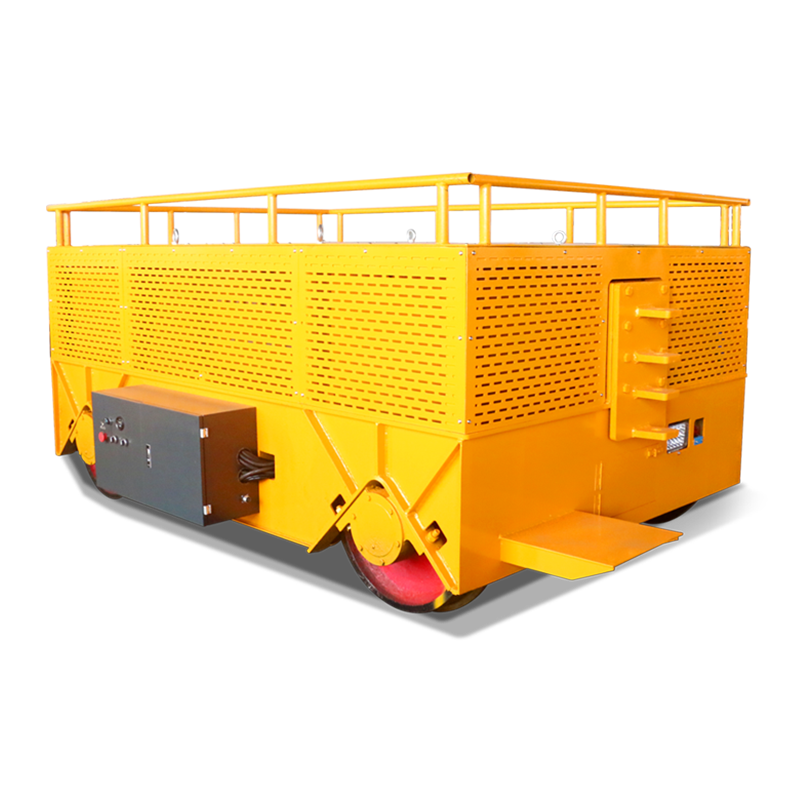
The frame doesn't get much attention until it cracks. Industrial electric carts carry loads from 1 ton to over 100 tons, and the frame takes all of it. Look for welded steel construction with box-section or I-beam profiles. Bolted frames are easier to repair but can loosen under vibration — lock washers and thread-locking compound should be standard.
Load distribution is critical. A cart rated for 10 tons needs to handle that load evenly, not just at the center. If your loads are off-center or irregular, ask about reinforced decks and additional cross-members. Some carts offer adjustable deck heights or tilting platforms — these add complexity, so check that the hinge and actuator points are properly braced.
Paint and corrosion protection are easy to overlook. In humid or chemical environments, powder coating or galvanizing adds years to frame life. Stainless steel construction is an option for food processing or pharmaceutical applications, but it's expensive and heavier.
Control Electronics and Safety Systems
Modern electric carts rely on controllers, sensors, and remote control systems. These are generally reliable, but they hate moisture, dust, and voltage spikes. IP ratings matter — IP65 is the minimum for industrial environments. IP67 or higher if you have pressure washing or outdoor exposure.
Remote control systems add convenience but introduce another failure point. Radio frequency (RF) remotes work well in open spaces but can suffer interference in metal-heavy environments like steel mills. Infrared remotes need line of sight, which isn't always practical. Wired pendant controls are old-school but bulletproof — many operators prefer them for critical applications.
Safety systems — emergency stops, collision sensors, audible alarms — aren't just regulatory boxes to tick. A cart that stops safely when something goes wrong protects both the machine and the people around it. Check that emergency stops are hardwired, not software-dependent, and that they cut power to the drive system immediately.
Maintenance Accessibility
A reliable cart is one you can maintain. If the motor is buried under the deck and requires disassembly to reach, routine checks won't happen. Look for carts with removable panels, external grease points, and accessible battery compartments. Some manufacturers offer modular designs where the drive unit or battery pack slides out on rails — this cuts maintenance time from hours to minutes.
Diagnostic capability is another plus. Controllers with error code displays or Bluetooth connectivity let you troubleshoot without a multimeter and a wiring diagram. It's not essential, but it saves time when something does go wrong.
Environmental Factors
No cart operates in a vacuum. Dust, moisture, chemicals, and temperature extremes all affect reliability. In foundries, heat radiates from the load itself — a cart transporting molten metal needs heat shields and high-temperature wiring. In cold storage, battery capacity drops and lubricants thicken. In chemical plants, corrosive vapors attack metal and electronics.
Floor condition is another variable. Cracked concrete, expansion joints, and debris all stress the wheels and frame. A cart designed for smooth warehouse floors won't last on a rough factory floor. Ask about suspension options or larger diameter wheels if your floor is less than ideal.
Supplier Evaluation
Reliability starts with the manufacturer. A supplier that tests carts under load, documents failure modes, and offers spare parts support is worth more than one with the lowest price. Ask about warranty terms — a 2-year warranty on the drive system and 1 year on the battery is a reasonable minimum. Ask about spare parts availability and whether they stock critical components locally.
References matter. A manufacturer that can point to carts running for 5+ years in similar applications is giving you real reliability data. Don't settle for vague claims about "high quality" or "industrial grade."
Conclusion
Electric cart reliability comes down to a few core factors: a robust drive system, the right battery technology, a well-built frame, and protection for the electronics. Get these fundamentals right, and the cart will serve you for years. Cut corners to save on upfront cost, and you'll pay for it in downtime and repairs. For engineers and operations managers, the message is simple: spec for your actual environment, plan for maintenance, and choose suppliers who can prove their carts last.