
 English
 简体中文
简体中文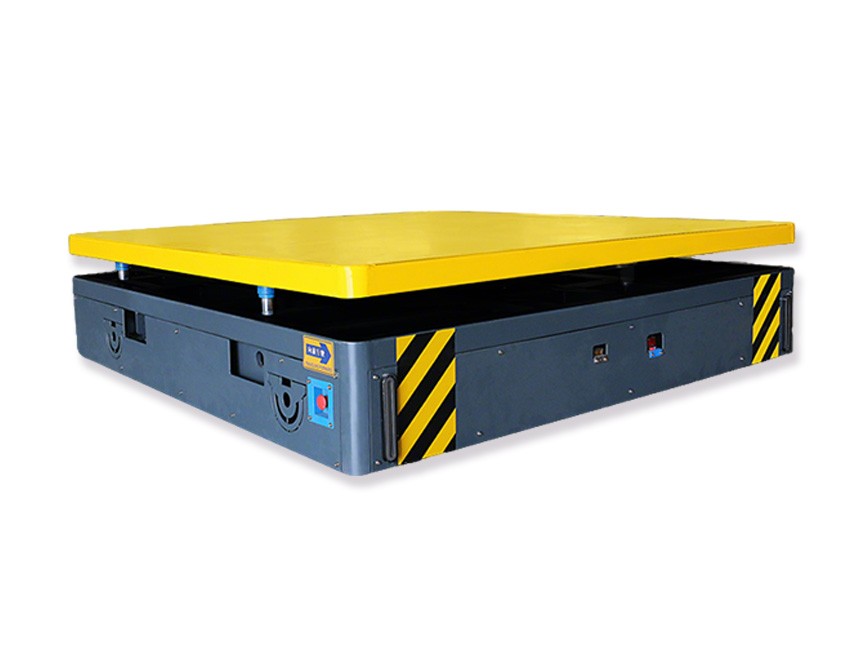
Introduction: The Challenge of Internal Logistics
Most factories hit the same wall eventually. Production lines keep improving, but material movement stays stuck in the past. Forklifts bottleneck at intersections, manual carts can't keep pace, and floor space gets eaten by staging areas. One mid-sized automotive parts manufacturer faced exactly this problem. Their assembly line output had increased 40% over three years, but internal transport capacity barely changed. The result? Parts piling up between stations, operators waiting for deliveries, and overtime costs climbing.
This case study breaks down how they solved it. Not with a massive automation overhaul, but with a focused transfer cart system that matched their actual workflow. The numbers at the end speak for themselves.
The Problem: Where Material Flow Breaks Down
The facility ran three production shifts, feeding components from a central warehouse to six assembly stations. The existing setup relied on a mix of forklifts and manual pallet jacks. It worked when volumes were lower. But as order sizes grew, three problems kept surfacing.
First, congestion. Forklifts shared aisles with pedestrian traffic. During peak shifts, drivers spent more time waiting than moving. Average delivery time from warehouse to line had stretched to 18 minutes — up from 8 minutes two years earlier.
Second, inconsistent delivery timing. Manual transport depended on operator availability. When someone was on break or handling an urgent request, stations sat idle. Production planners couldn't build reliable schedules around unpredictable material arrival.
Third, safety incidents. Three near-misses with forklifts in six months had prompted management to look for alternatives. The narrow aisles between stations simply weren't designed for vehicle-pedestrian mixing.
The Solution: Electric Transfer Cart System
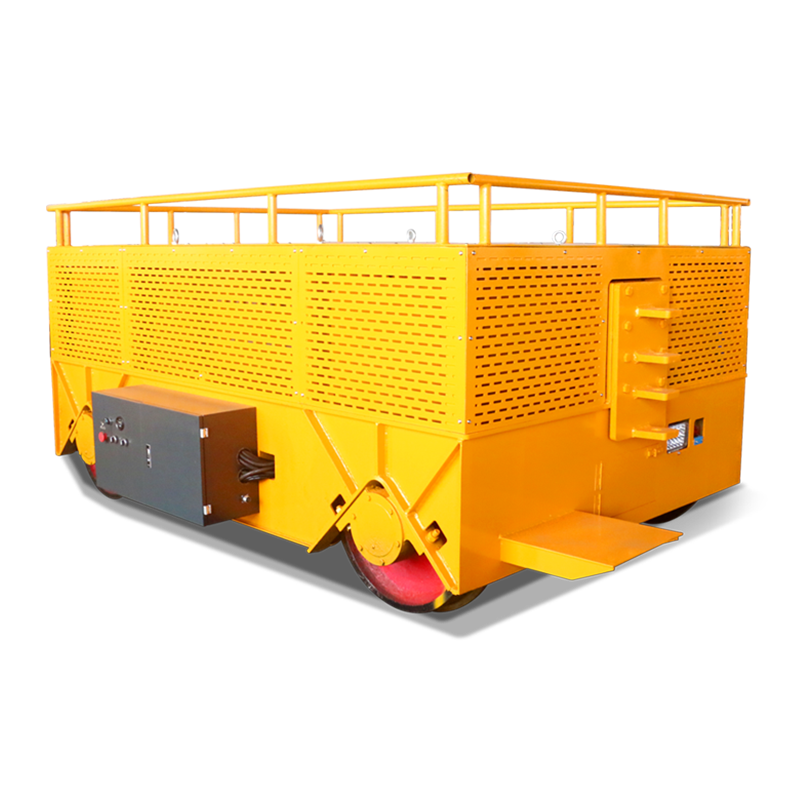
After evaluating several options, the team chose a rail-guided electric transfer cart system. Not because it was the most advanced, but because it fit their specific constraints.
Why rail-guided? The facility had fixed production lines that weren't moving anytime soon. Rail paths could follow the existing aisle layout without widening corridors. Plus, rail systems eliminate navigation complexity — no SLAM mapping, no QR code maintenance, no laser reflector installation.
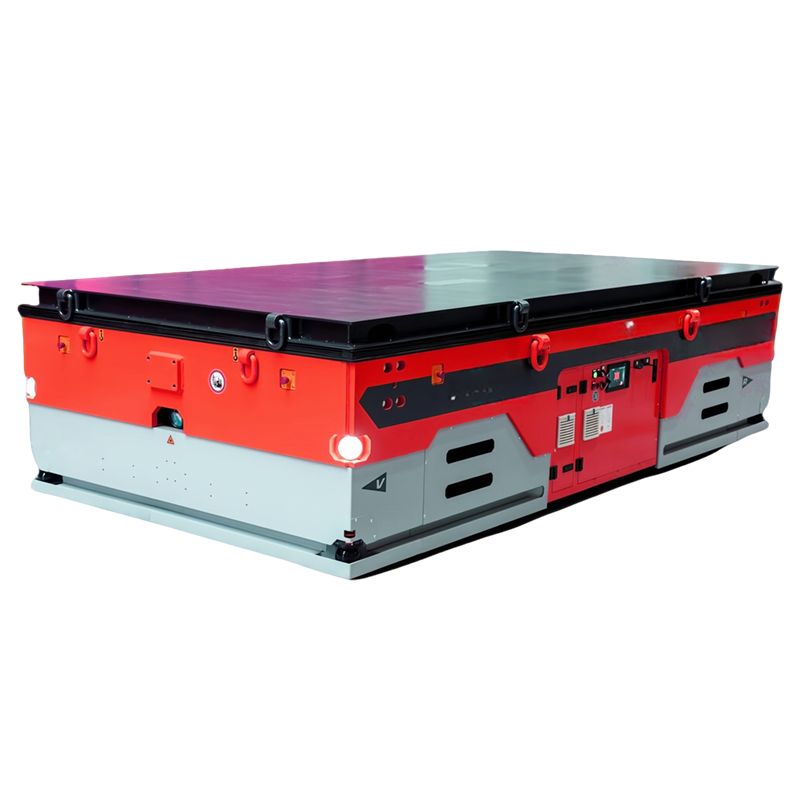
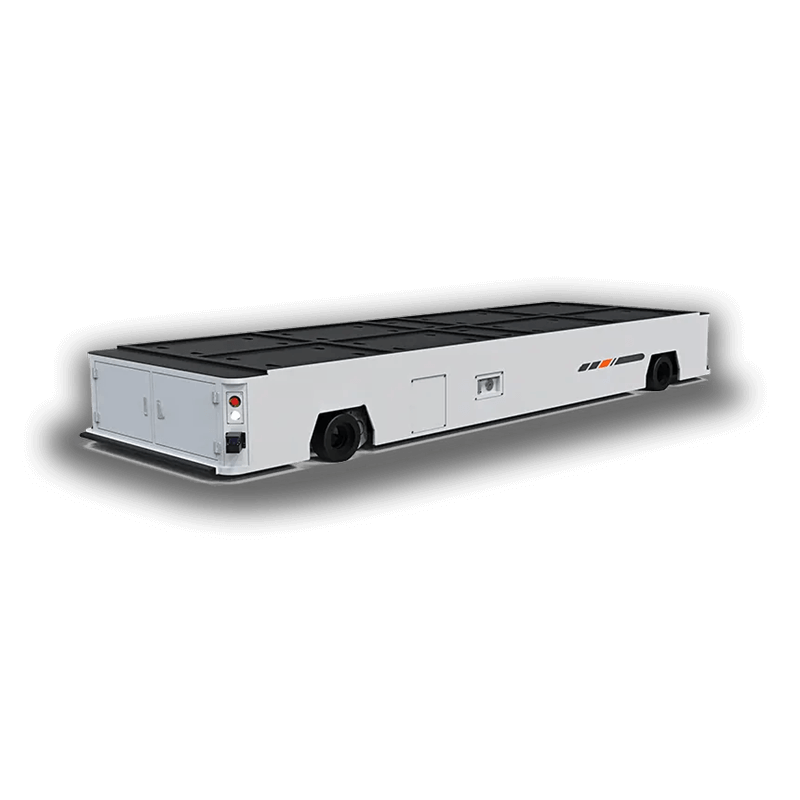
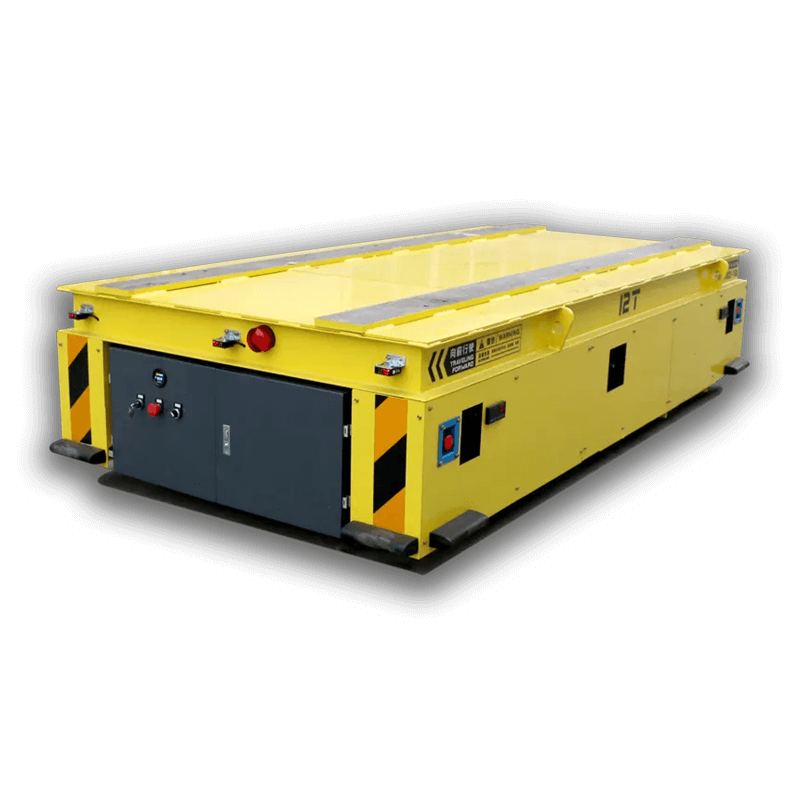
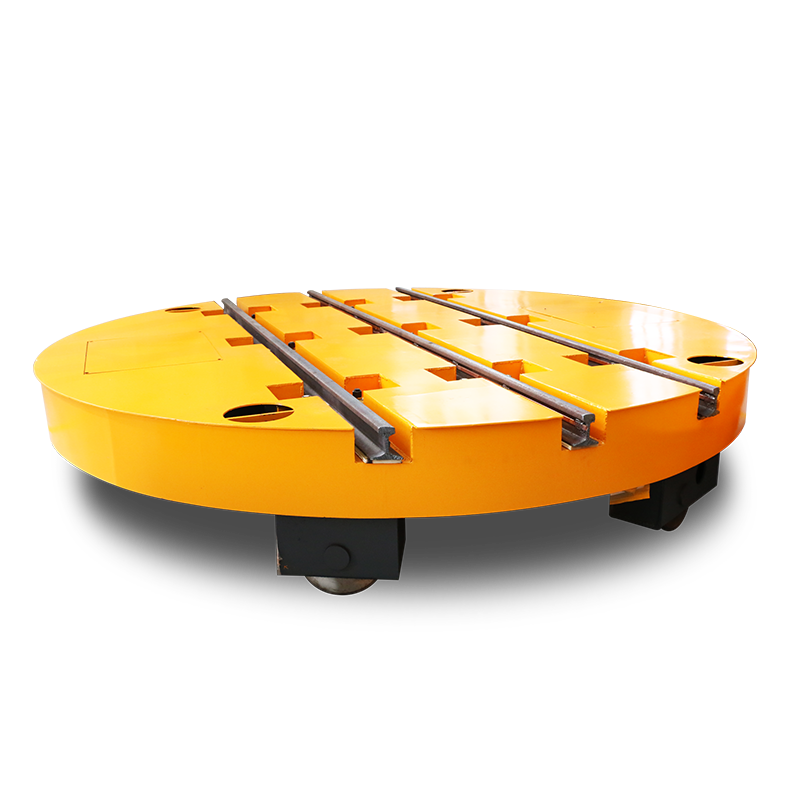
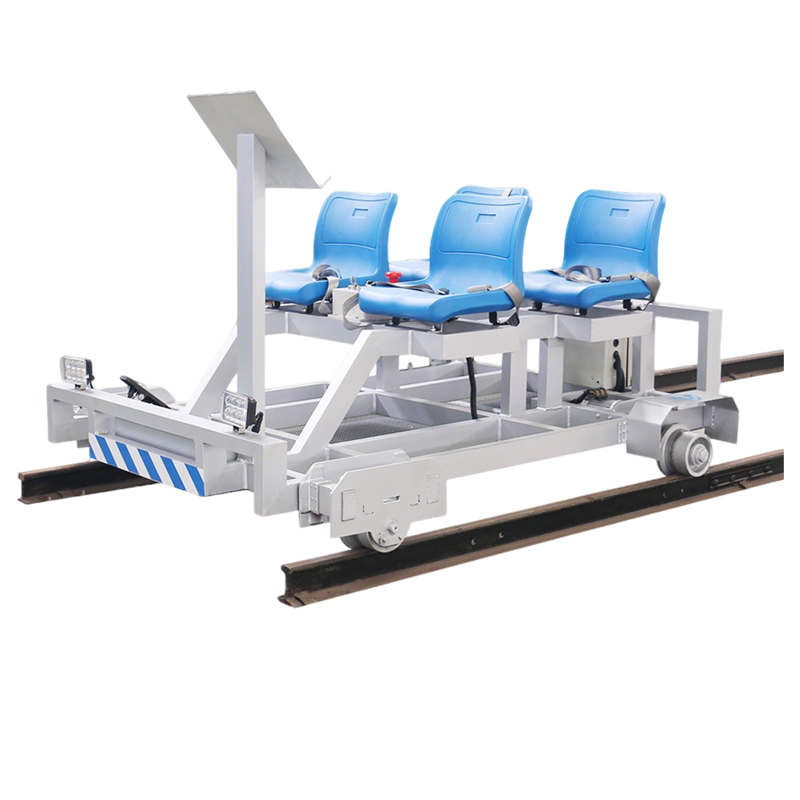
The system included four 2-ton capacity electric transfer carts running on a 280-meter rail loop connecting the warehouse to all six assembly stations. Each cart operated on a scheduled cycle with manual loading/unloading at fixed points. Simple, but exactly what the operation needed.
System Specifications
Here is what the setup looked like in practice:
- Cart capacity: 2,000 kg per load
- Travel speed: 1.2 m/s (adjustable via variable frequency drive)
- Rail length: 280 meters total loop
- Charging method: Opportunity charging at warehouse station
- Control: PLC-based with HMI scheduling interface
- Safety: Emergency stop buttons, bumper switches, audible alarms
Nothing exotic. The carts used standard AC drive motors and lead-acid batteries — proven components with short lead times and local service availability.
Implementation: What Actually Happened
The deployment took six weeks from rail installation to full operation. Here is how it broke down.
Week 1-2: Rail installation. The rail system mounted directly on the existing concrete floor. No excavation needed. The installation team worked during off-shifts to avoid disrupting production.
Week 3: Cart commissioning. Each cart underwent load testing and speed calibration. The PLC program was loaded with the initial schedule: one cart every 12 minutes on the loop.
Week 4: Operator training. Warehouse staff learned loading procedures. Assembly operators learned the new call-button system for requesting urgent deliveries.
Week 5-6: Gradual ramp-up. The system started at 60% capacity while operators adjusted. By week 6, it was running full schedule with all four carts.
One unexpected issue surfaced during commissioning. The initial 15-minute cycle time left carts idle at loading points. After observing actual loading times, the team tightened the schedule to 12 minutes. That small change improved throughput without adding equipment.
Results: Measurable Improvements
After three months of full operation, the facility compared key metrics against the previous quarter.
| Metric | Before | After | Improvement |
|---|---|---|---|
| Average delivery time | 18 minutes | 7 minutes | 61% reduction |
| Transport labor hours | 144 hours/week | 48 hours/week | 67% reduction |
| Line downtime (waiting) | 4.2 hours/week | 0.6 hours/week | 86% reduction |
| Safety incidents | 3 near-misses | 0 incidents | Eliminated |
| Floor space recovered | — | 120 m² | Staging area removed |
The labor savings alone covered the system cost in 22 months. But the less obvious benefit was production planning reliability. With predictable 7-minute delivery times, schedulers could tighten station cycle times and increase overall output 8% without adding shifts.
Key Takeaways
This case isn't about cutting-edge automation. It's about matching the right tool to the actual problem. A few lessons stand out.
Start with the bottleneck, not the technology. The team evaluated AGVs and AMRs early on. Both were overkill for fixed routes and predictable schedules. The simpler rail-guided system did the job at one-third the cost.
Measure before changing. The 12-minute cycle time came from observing real operations, not from a spreadsheet. Small adjustments based on actual data often beat theoretical optimization.
Plan for human interaction. The call-button system for urgent requests wasn't in the original specification. Operators added it during week 3 because they needed flexibility. Good implementation leaves room for operator input.
Think about maintenance access. The rail layout included bypass sections so one cart could be taken offline for maintenance without stopping the loop. That detail proved valuable during the first battery replacement cycle.
Conclusion
Factory logistics optimization doesn't always require complex automation. In this case, a well-designed transfer cart system solved specific, measurable problems with straightforward engineering. The result was faster delivery, lower labor costs, safer operations, and more reliable production scheduling.
For facilities with fixed routes, predictable volumes, and space constraints, rail-guided electric transfer carts remain a practical, cost-effective option. The key is understanding your actual workflow before choosing the technology.