
 English
 简体中文
简体中文
Electric Cart Usage Best Practices
Electric transfer carts are straightforward machines, but how operators use them determines performance, safety, and equipment lifespan. We've seen identical carts last 15 years in one facility and need major repairs in 3 years at another. The difference is almost always operational discipline. Here are the practices that separate high-performing operations from the rest.
Pre-Operation Checks
Five minutes before first use prevents hours of downtime:
- Battery level: Start with full charge. Running on low charge strains batteries and reduces performance
- Brake test: Verify brakes hold on a slight incline before loading
- Tire inspection: Check for cuts, embedded debris, and proper inflation (pneumatic tires)
- Load platform: Clear debris, verify fixtures are secure
- Control response: Test forward, reverse, and emergency stop before loading
- Horn and lights: Verify audible and visible warning systems work
Document the check. If something fails, tag the cart out of service immediately.
Loading Discipline
How you load matters as much as what you load:
- Center the load: Off-center loads stress wheels, bearings, and frame. Use marked centerlines on the platform
- Secure properly: Straps, chains, or clamps — never rely on gravity alone
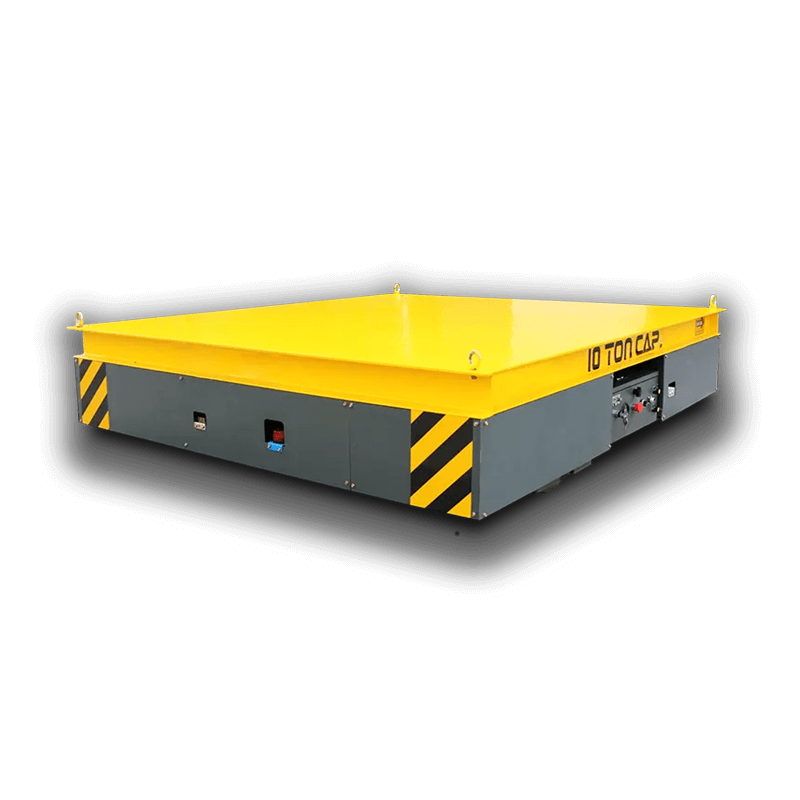
- Respect capacity: 10-ton cart means 10 tons distributed evenly. Point loads concentrate stress
- Check clearance: Load height plus cart must clear doorways, pipes, and overhead obstacles
- Balance front-to-back: Heavy end first on slopes; balanced for level transport
We've seen carts damaged not by overload, but by repeated 5% overloads that operators considered "close enough."
Driving Technique
Electric carts aren't race cars. Smooth operation extends life:
- Gradual acceleration: Hard starts strain motors, drives, and couplings
- Anticipate stops: Coast when possible; use regenerative braking if equipped
- Corner slowly: Centrifugal force shifts load; sharp turns risk tipping or load shift
- Avoid sudden direction changes: Stop completely before reversing
- Match speed to conditions: Slow on wet floors, uneven surfaces, and in pedestrian areas
Route Planning
The shortest path isn't always the best:
- Use designated lanes: Separated cart paths reduce conflicts and accidents
- Plan around peak traffic: Avoid main aisles during shift changes and break times
- Check floor conditions: Oil spills, debris, and damaged flooring cause accidents
- Mind the grades: Downhill loaded requires more braking distance; uphill empty wastes battery
- Clearance checks: Know your cart's dimensions and verify every doorway and turn
Charging Discipline
Battery care determines cart availability:
- Charge after every shift: Don't leave batteries partially discharged overnight
- Use correct charger: Voltage and chemistry must match. Wrong chargers damage batteries and create fire risk
- Charge in ventilated area: Lead-acid batteries emit hydrogen during charging
- Don't interrupt charging: Partial charges reduce lead-acid battery life
- Check water levels (lead-acid): Weekly inspection, distilled water only
Environmental Awareness
Carts operate in varied conditions. Adjust accordingly:
- Wet floors: Reduce speed, increase stopping distance, check brakes after exposure
- Outdoor use: Protect controllers and batteries from rain; check tire traction
- High temperature: Battery performance drops above 40°C; allow cooling periods
- Cold environments: Battery capacity drops below 0°C; keep batteries warm when possible
- Dusty conditions: Clean motors and controllers regularly; check air filters if equipped
End-of-Shift Procedures
How you finish matters:
- Park in designated area, not blocking exits or fire equipment
- Apply parking brake, remove key or engage lockout
- Plug in charger if battery below 80%
- Report any issues in the logbook — unusual noises, reduced power, control problems
- Clean the platform and remove debris
Training Never Stops
Initial certification isn't enough. Refresher training should cover:
- New equipment features and updates
- Incident review — near misses and accidents
- Seasonal considerations (ice, heat, humidity)
- Best practice sharing between shifts
Quarterly refreshers keep safety and efficiency top of mind.
Conclusion
Electric carts are durable, but they're not indestructible. Consistent pre-operation checks, careful loading, smooth driving, disciplined charging, and environmental awareness multiply equipment life and maintain safety. The best operations treat cart operation as a skill, not just a task — and the results show in their uptime and safety records.