
 English
 简体中文
简体中文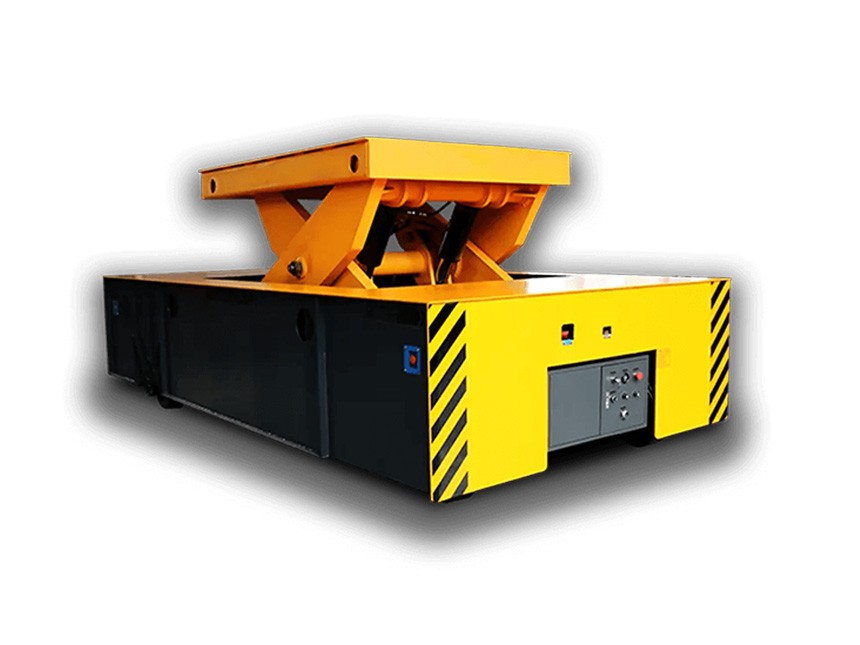
Why Control Systems Are Central to Remote Cart Performance
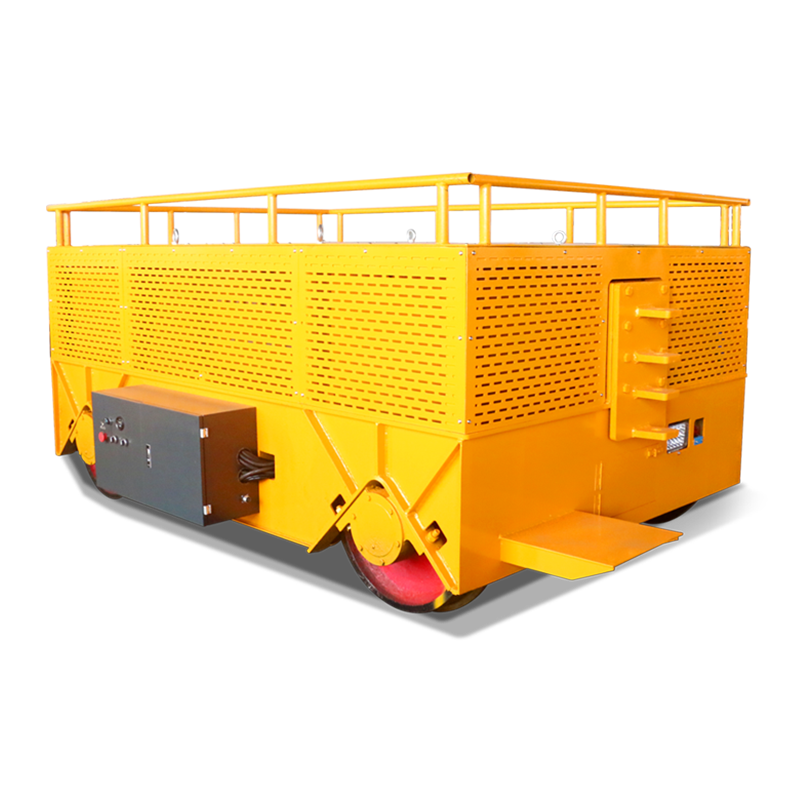
Remote industrial carts—transfer carts operated via wireless control rather than pendant cables or onboard stations—require sophisticated control systems to replace the direct physical connection between operator and machine. The control system is the defining technology that makes remote operation possible, and its quality determines whether remote carts deliver genuine operational value or create new problems that offset their flexibility benefits. Understanding the architecture and requirements of remote cart control systems helps specify and evaluate equipment for remote operation applications.
1. Wireless Communication Architecture
Remote cart control depends on wireless communication between the handheld remote unit and the cart's onboard receiver system. The wireless protocol used must provide reliable communication in the electrically noisy environment of industrial facilities—motors, variable frequency drives, welding equipment, and other electrical systems generate interference that can disrupt wireless signals. Industrial remote control systems use spread-spectrum radio technologies with error detection and correction that maintain communication integrity despite interference.
The radio frequency and power rating of the remote system determine its operational range and penetration through obstacles. Standard industrial remotes operating in the 2.4GHz band provide adequate range and obstacle penetration for most facility sizes but can experience interference from WiFi networks operating on the same frequencies. Systems using FHSS (Frequency Hopping Spread Spectrum) technology avoid interference by continuously switching frequencies, maintaining reliable communication in environments with multiple wireless systems operating simultaneously.
2. Safety Circuit Design and Redundancy
Remote operation removes the operator from immediate proximity to the cart, creating safety considerations that wired or onboard controls do not address. The primary safety concern is maintaining the ability to stop the cart immediately if communication is lost or if the operator observes a dangerous situation from a distance. Safety circuit design for remote carts must address both scenarios with fail-safe behavior.
Dead-man functionality is standard on remote carts—the cart must stop when the remote signal is interrupted, whether because the operator released a enable trigger, the remote moved out of range, or interference blocked communication. Dual-channel safety relays verify correct circuit state and will fail in the safe direction if component failures occur. The best implementations include heartbeat signals—continuous verification that communication is actively maintained—and automatic stop upon heartbeat loss even if the radio link technically remains connected.
3. Motion Control and Drive Integration
Remote cart motion control must replicate the functionality of onboard controls while managing the additional latency and potential communication delays inherent in wireless operation. Motion commands—start, stop, direction, speed—travel from the remote to the cart's drive controller, introducing a small but nonzero delay that affects how the cart responds to operator inputs. Control system design must account for this latency to prevent overshoot, oscillation, or harsh acceleration that would make the cart difficult to operate smoothly.
Speed control from remote is typically implemented as proportional control—the further the operator pushes the speed lever or joystick from center, the faster the cart travels. Precision speed control at low speeds is particularly important for positioning accuracy: a cart that drops to an unacceptable minimum speed when fine adjustments are needed makes accurate placement difficult. The drive controller and remote system must be designed together to provide smooth, precise speed control across the full speed range.
4. Multi-Cart Management and Address Assignment
In facilities operating multiple remote carts, the control system must ensure that commands from a single remote go only to the intended cart and not accidentally to other carts in the same area. This requires each remote and cart pair to have a unique address or code that prevents cross-talk between systems. Address assignment methods range from simple rotary dial switches to electronic programming that prevents unauthorized address changes.
Multi-cart management extends beyond individual remote-cart pairing to fleet-level coordination. Some facilities implement cart fleet management systems that track the location and status of all carts, coordinate movements to prevent collisions, and optimize cart deployment across competing transport demands. These management systems integrate with the cart's remote control infrastructure to provide supervisory control and monitoring while individual operators retain direct control authority over assigned carts.
5. Operator Interface and Ergonomics
The remote handset is the operator's primary interface with the cart, and its design affects both operational efficiency and safety. Remote handsets for industrial carts must be rugged enough to survive daily use in demanding environments while providing clear, intuitive control that operators can use effectively without extensive training. The physical layout of controls, the weight and balance of the handset, and the visibility of status displays all affect how well operators can perform their transport tasks.
Critical controls—emergency stop, enable/maintain active trigger, direction selector—should be positioned for immediate access without visual confirmation, allowing operators to respond to hazards without looking away from the cart's path. Status displays should show cart speed, battery condition, and any active warnings clearly enough to be read in varying lighting conditions. Handsets rated for industrial environments include IP65 or higher ingress protection against dust and water, and meet mechanical drop and vibration requirements appropriate for their use context.
6. Integration with Facility Control Systems
Advanced remote cart applications integrate with broader facility control and manufacturing execution systems. Integration points include receiving dispatch commands from warehouse management systems, reporting cart location and status to manufacturing execution systems, and responding to facility-wide emergency stop commands. These integrations require the cart's control system to communicate on standard industrial protocols—Profinet, EtherNet/IP, Modbus TCP, or equivalent—that facility systems use.
Integration with safety systems is equally important for larger deployments. Remote carts operating in areas shared with personnel should integrate with facility access control systems that track who is authorized to operate carts in each zone. Zone-based authorization—where a remote operator must be in the correct zone to activate the cart they are assigned to—prevents unauthorized operation in areas where the operator cannot maintain visual contact with the cart.