
 English
 简体中文
简体中文Why Choose Conveyor-Type AGVs? | Conveyor AGV vs. Traditional Transport

In modern factories, internal logistics has become a critical part of production efficiency. Even with advanced machines, robots, and digital systems, many manufacturers still rely on manual carts, forklifts, pallet jacks, or basic AGVs to move materials. Although these methods work, they often create bottlenecks, inconsistencies, and hidden operational costs.
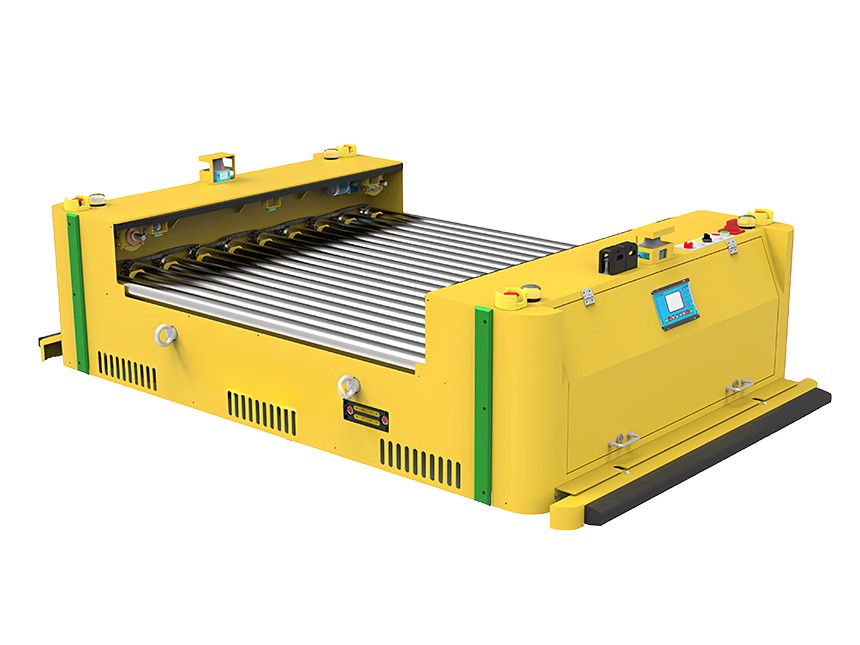
Conveyor-type AGVs solve these problems by combining automated transport with automated material handoff, enabling factories to move goods with precise timing and zero manual intervention. This article explains why more manufacturers are choosing Conveyor AGVs—and how they outperform traditional transport systems.
(Specs can be customized based on workflow requirements)
| Item | Specification |
|---|---|
| Product Type | Conveyor Automated Guided Vehicle (AGV) |
| Primary Function | Automated material transport with built-in conveyor |
| Conveyor Types | Roller conveyor / Belt conveyor / Chain conveyor |
| Load Capacity | From bins & cartons to pallet-level loads |
| Transfer Method | Automatic loading & unloading (hands-free) |
| Docking Accuracy | ±10 mm |
| Navigation Options | Laser SLAM / QR-guided / Hybrid |
| Travel Speed | Adjustable to match production takt time |
| Operation Mode | Fully automated, multi-shift capable |
| Power Supply | Battery powered |
| Charging Options | Fast charging / Automatic docking / Battery swap |
| Control System | Industrial PLC-based control |
| System Integration | MES / WMS / PLC / Robotic cells |
| Safety System | 360° LiDAR, obstacle detection, speed zoning |
| Warning Devices | Audible alarms & LED indicators |
| Operating Environment | Production lines, warehouses, cleanrooms |
| Customization | Conveyor type, size, layers, load handling |
| Typical Applications | Assembly, packaging, sorting, line-side transfer |
Traditional methods, such as forklifts or standard AGVs, do only one job: moving materials.
They still require human labor for:
Picking up parts
Positioning loads
Loading/unloading
Aligning with machines
Ensuring safe transfer
A Conveyor AGV eliminates all of this.
With its built-in powered conveyor, it can:
Automatically transfer items onto workstations
Receive materials from fixed conveyors
Align precisely with robotic cells
Move goods without manual assistance
This makes Conveyor AGVs perfect for continuous-flow production.
Forklifts and carts introduce variability:
Slight misalignment
Over-speed cornering
Unpredictable placement
Accidental impacts
Human error
AOTENENG Conveyor AGVs maintain:
±10 mm docking accuracy
Smooth, controlled handoff
Zero-contact alignment
Predictable movement patterns
This level of precision is essential for industries like electronics, automotive parts, and cleanroom manufacturing.
Standard AGVs still rely on workers to load or unload materials.
But Conveyor AGVs remove manual touchpoints entirely, resulting in:
Fewer operators needed
Lower labor fatigue
Reduced risk of injuries
Fewer workflow interruptions
More predictable shift scheduling
Factories facing labor shortages benefit the most from this upgrade.
Manual and semi-automated methods often cause:
Waiting times
Delays due to busy forklifts
Miscommunication
Irregular delivery timing
Conveyor AGVs use intelligent fleet management to ensure:
Real-time job dispatch
Automatic rerouting
Queue balancing
Collision-free path planning
The result is stable, continuous material flow, which directly increases assembly line throughput.
Forklifts are one of the leading sources of factory accidents.
Manual cart handling also introduces ergonomic risks.
AOTENENG Conveyor AGVs improve safety with:
360° LIDAR
Multi-zone obstacle detection
Adjustable safe-speed control
Audible/visual alerts
Emergency stop circuits
They move predictably, follow defined routes, and eliminate unsafe interactions with heavy machinery.
Compared to forklifts:
No exhaust
Reduced noise
Minimal vibration
No fuel leaks
This makes Conveyor AGVs ideal for:
Food & beverage plants
Electronics factories
Cleanrooms
Medical device production
Indoor warehouses
Their quiet operation also improves the working environment for staff.
Traditional manual logistics cannot connect to digital systems.
Conveyor AGVs integrate seamlessly with:
MES
WMS
PLC
Robotic stations
Automated conveyors
Vision inspection systems
This enables:
Automated task generation
Real-time tracking
Zero-touch operations
Data-driven workflow optimization
Factories aiming for Industry 4.0 benefit greatly from this connectivity.
Forklifts require fuel, operators, frequent maintenance, and safety training.
Manual labor requires continuous staffing, supervision, and training.
Basic AGVs still require worker intervention.
Conveyor AGVs deliver:
Lower labor cost
Lower maintenance cost
Lower energy consumption
Higher uptime
Better equipment lifespan
The ROI becomes clear within months—especially on multi-shift production lines.
AOTENENG offers industrial-grade, customizable Conveyor AGV solutions designed for real manufacturing environments. Our advantages include:
10+ years automation expertise
Exported to 48+ countries
Strong R&D engineering capability
Custom conveyor configurations
Robust steel chassis structure
High docking accuracy
Seamless MES/WMS integration
24/7 operational reliability
Whether upgrading a single line or transforming an entire plant, AOTENENG Conveyor AGVs provide the flexibility and performance needed for modern production.
You have questions, comments or general inquiries? We value your suggestions. Drop us a line! Fill the form below just to say hi or to send us any questions or comments you might have.