
 English
 简体中文
简体中文Essential Safety Features for Heavy-Duty AGVs in Industrial Environments

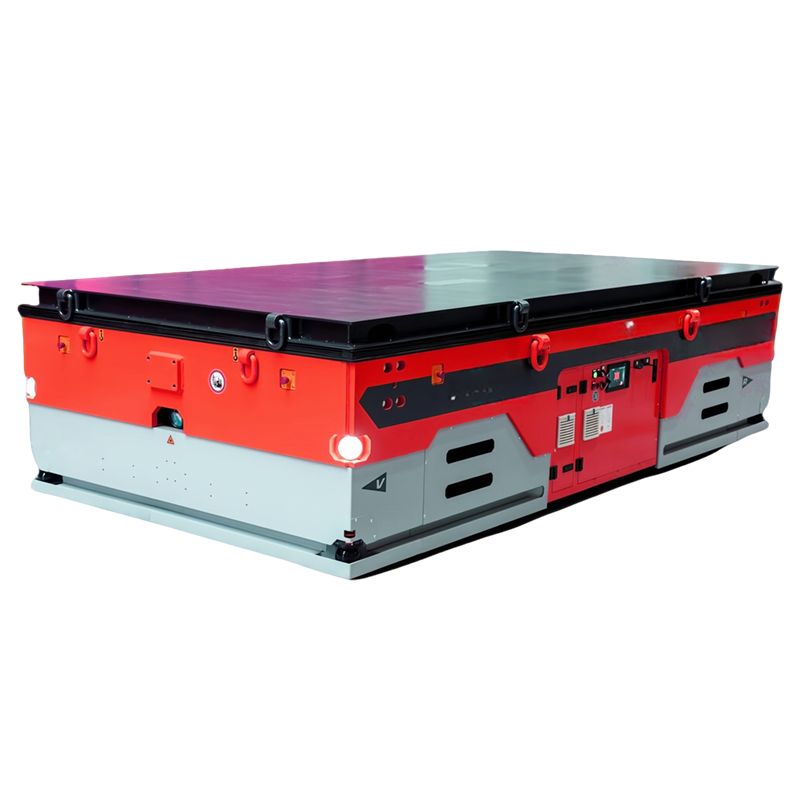
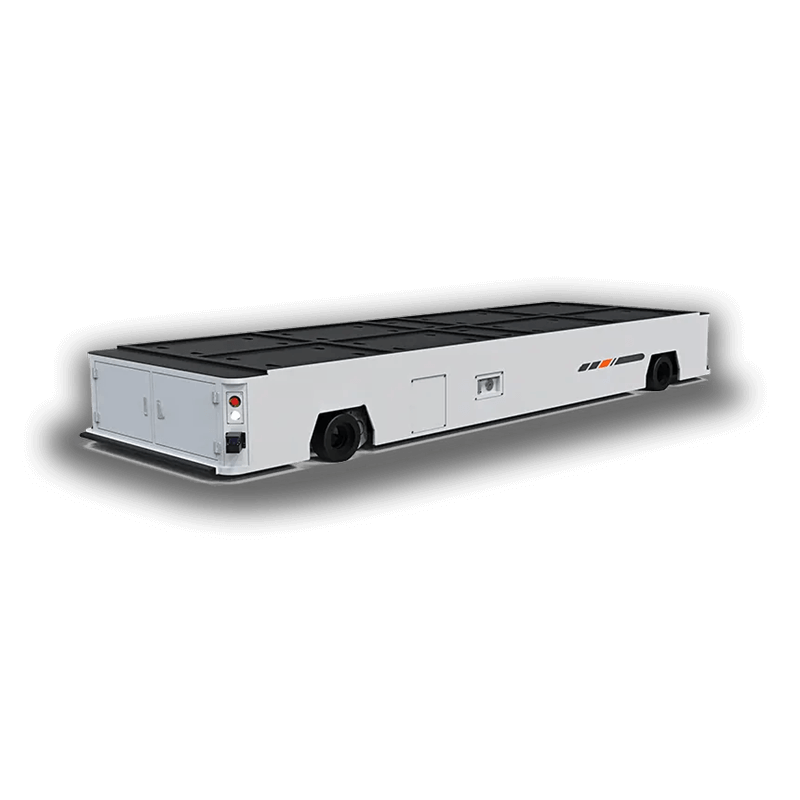
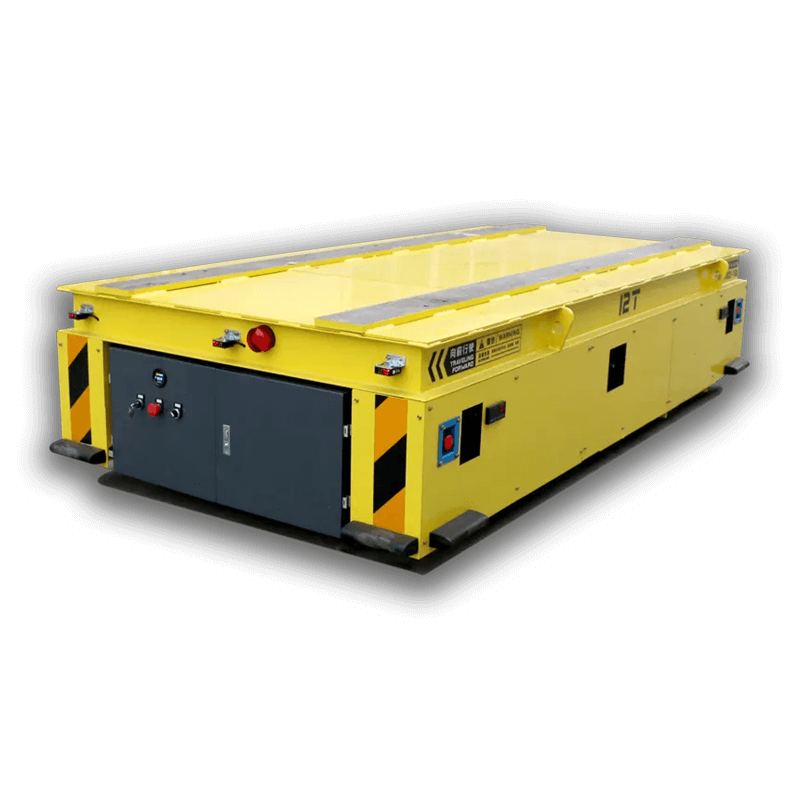
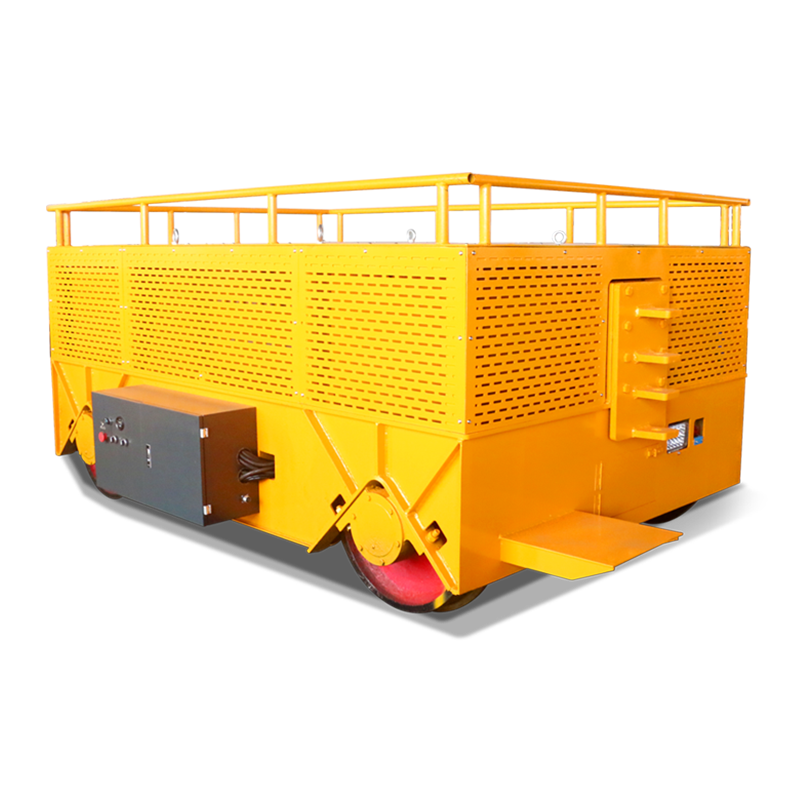
Safety is the defining requirement of any Heavy-Duty AGV system, especially when vehicles are responsible for transporting loads ranging from several tons to more than 50 tons. A small impact under such mass can cause severe equipment damage, production interruption, or even personnel injury. For this reason, modern industrial facilities expect their Heavy-Duty AGVs to incorporate multi-layered, redundant, and intelligent safety systems.
This technical article breaks down the essential safety technologies that a Heavy-Duty AGV must include and explains how AOTENENG integrates these systems into its multi-ton AGV platforms.
(Values can be customized based on project requirements)
| Category | Specification |
|---|---|
| Product Type | Heavy-Duty Automated Guided Vehicle (AGV) |
| Rated Load Capacity | 10–40 tons (higher capacity available by request) |
| Recommended Load Margin | 125–150% of actual working load |
| Load Characteristics | Centered / Offset / Uneven / High center-of-gravity loads |
| Vehicle Structure | Reinforced welded steel frame, fatigue-resistant design |
| Platform Options | Flat deck / Hydraulic lift / Scissor lift / Turntable / Coil saddle / Custom fixtures |
| Platform Size | Customized to load dimensions |
| Drive System | High-torque electric drive with industrial reducer |
| Acceleration & Braking | Smooth-start & soft-stop logic for load stability |
| Navigation Methods | Magnetic tape / QR code (vision) / Hybrid navigation |
| Positioning Accuracy | ±5–10 mm |
| Travel Speed (Loaded) | 0–30 m/min (adjustable) |
| Turning Capability | Straight travel / Steering / Zero-radius (design dependent) |
| Power Supply Options | Lithium battery / Lead-acid battery |
| Charging Methods | Manual charging / Fast charging / Automatic docking |
| Battery Management | Optional quick-swap battery drawer |
| Operating Time | Suitable for single-shift to 24/7 multi-shift operation |
| Safety Sensors | Front & rear LiDAR, side ultrasonic detection |
| Safety Functions | Obstacle detection, emergency stop bumpers, speed zoning |
| Warning System | Audible alarms, LED warning lights |
| Control System | PLC-based industrial control |
| System Integration | MES / WMS / Production line synchronization |
| Fleet Management | Multi-AGV coordination supported |
| Operating Environment | Indoor heavy industrial environments |
| Special Versions | Heat-resistant / Explosion-proof / Workshop-specific |
| Customization Scope | Load capacity, platform type, navigation, safety level |
LiDAR is the primary safety sensor for heavy-load AGVs. High-capacity industrial AGVs must detect obstacles long before the vehicle reaches them due to:
Longer braking distances under heavy mass
Slower response times of large payload inertia
Narrow aisle clearance in many factories
AOTENENG uses dual-zone LiDAR arrays configured to monitor:
Wide-range forward scanning
Rear detection during reverse operation
Side-angle protection for turning maneuvers
These multi-zone layers enable the AGV to identify pedestrians, forklifts, carts, and unexpected obstacles with high precision.
While LiDAR handles long-range detection, ultrasonic sensors are critical for low-speed, close-proximity situations:
Docking to machines or racks
Entering narrow passages
Traveling near walls or heavy equipment
Precision lineup for mold or die positioning
Ultrasonic sensors act as a secondary layer of protection, creating a near-field bubble around the AGV where even small objects can be detected.
Even with advanced detection systems, physical contact protection remains essential—especially for multi-ton platforms.
AOTENENG integrates mechanically backed safety bumpers with electronic fail-safe circuits:
Instant emergency stop on bumper activation
Full system cutoff for drive motors
Low-latency reaction to minimize energy transfer
With heavy loads, milliseconds matter. This physical layer ensures the AGV responds immediately if all other protective layers fail.
For heavy-duty AGVs, safety is not only about obstacle detection—it’s also about how the AGV moves.
Key safety motion features include:
Soft-start acceleration to avoid load shift
Controlled deceleration based on payload mass
Automatic speed limiting in congested zones
Corner speed reduction based on route geometry
Load-adaptive motion profiles to improve stability
AOTENENG’s control system dynamically adjusts drive torque and speed limits depending on the AGV’s weight, slope, and environmental conditions.
Stopping a 20-ton load is fundamentally different from stopping a 1-ton warehouse AMR.
AOTENENG uses a redundancy-driven braking architecture:
Electromagnetic brake holding
Dynamic/regenerative braking for controlled deceleration
Emergency friction braking under fault conditions
Battery-failure safe-stop capability
These layers ensure the AGV can stop safely under normal, emergency, or electrical fault conditions.
Heavy-Duty AGVs should never rely on a single control pathway.
AOTENENG integrates:
Redundant safety CPUs
Independent safety circuits for motion and braking
Dual-channel emergency-stop loops
Continuous self-diagnostic routines
This ensures that even if one system fault occurs, the AGV remains capable of safe stopping and hazard avoidance.
Modern AGV safety also extends beyond the vehicle itself.
AOTENENG’s fleet management system supports:
Real-time vehicle status visualization
Battery and motor temperature monitoring
Sensor health checks
Fault history analysis
Predictive maintenance alerts
These features help prevent accidents caused by equipment degradation or unexpected faults.
In multi-ton material handling, safety is the central engineering challenge. A Heavy-Duty AGV must do more than move a load from point A to point B—it must ensure that every movement is predictable, controlled, and protected by multiple redundant systems.
AOTENENG integrates comprehensive hardware and software safety features designed specifically for the demands of heavy manufacturing. For factories moving molds, dies, steel blocks, or large assemblies, these systems provide the reliability and confidence required to safely automate high-load logistics.
You have questions, comments or general inquiries? We value your suggestions. Drop us a line! Fill the form below just to say hi or to send us any questions or comments you might have.