
 English
 简体中文
简体中文How to Configure Heavy-Duty AGVs for Long-Distance, High-Capacity Transport

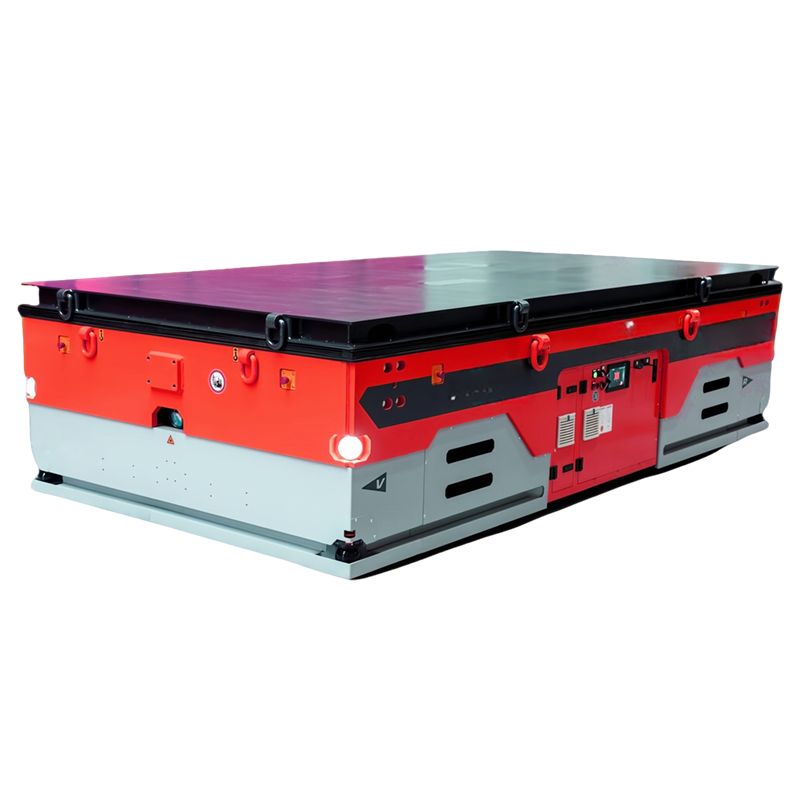
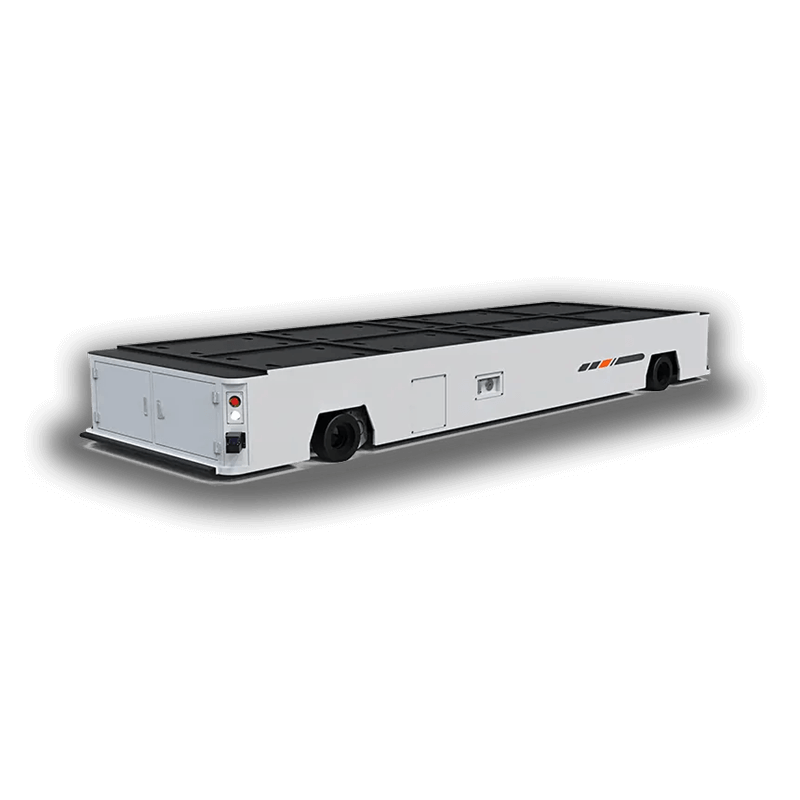
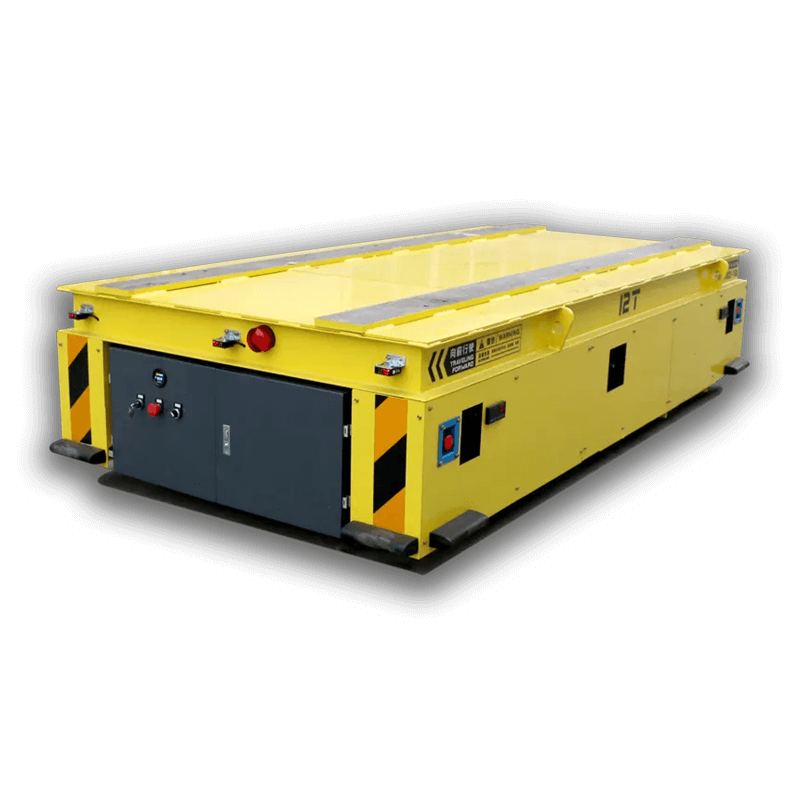
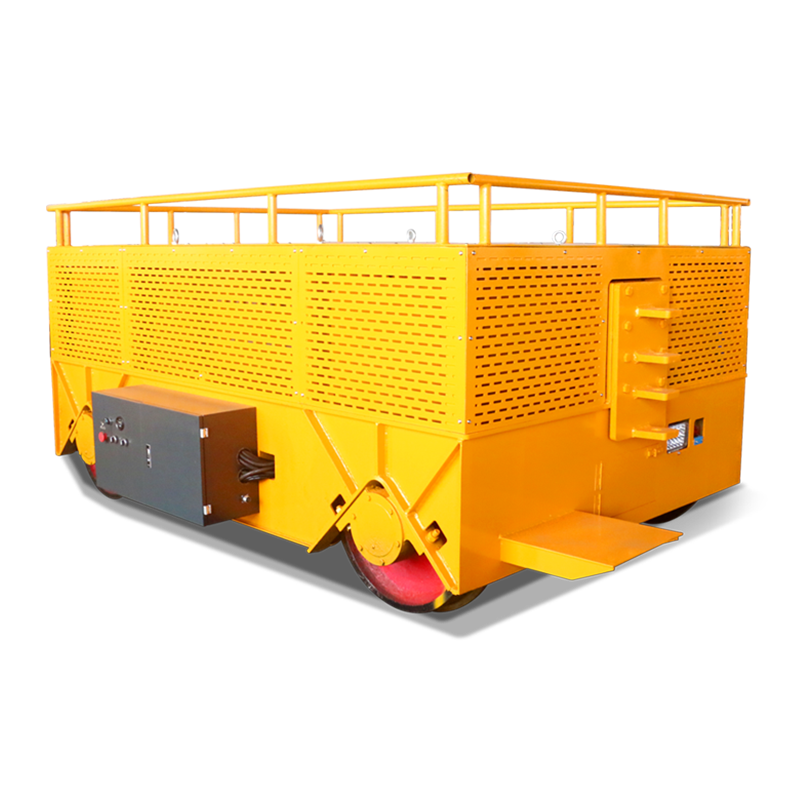
Transporting multi-ton loads over long distances inside large manufacturing facilities is one of the most demanding engineering challenges in internal logistics. While short-distance heavy-load movement relies primarily on platform strength and controlled maneuvering, long-distance transport introduces additional requirements involving traction, power endurance, route logic, braking stability, and system redundancy.
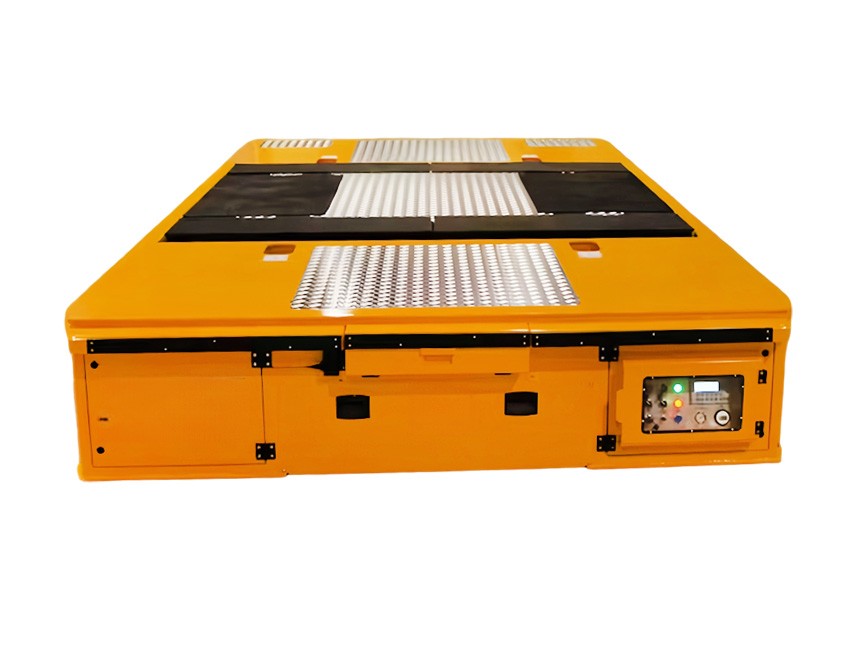
This article provides a technical breakdown of how to properly configure a Heavy-Duty AGV for long-distance, high-capacity transport, and outlines how AOTENENG designs its multi-ton systems to maintain stability and endurance across extended routes.
(Values can be customized based on project requirements)
| Category | Specification |
|---|---|
| Product Type | Heavy-Duty Automated Guided Vehicle (AGV) |
| Rated Load Capacity | 10–40 tons (higher capacity available by request) |
| Recommended Load Margin | 125–150% of actual working load |
| Load Characteristics | Centered / Offset / Uneven / High center-of-gravity loads |
| Vehicle Structure | Reinforced welded steel frame, fatigue-resistant design |
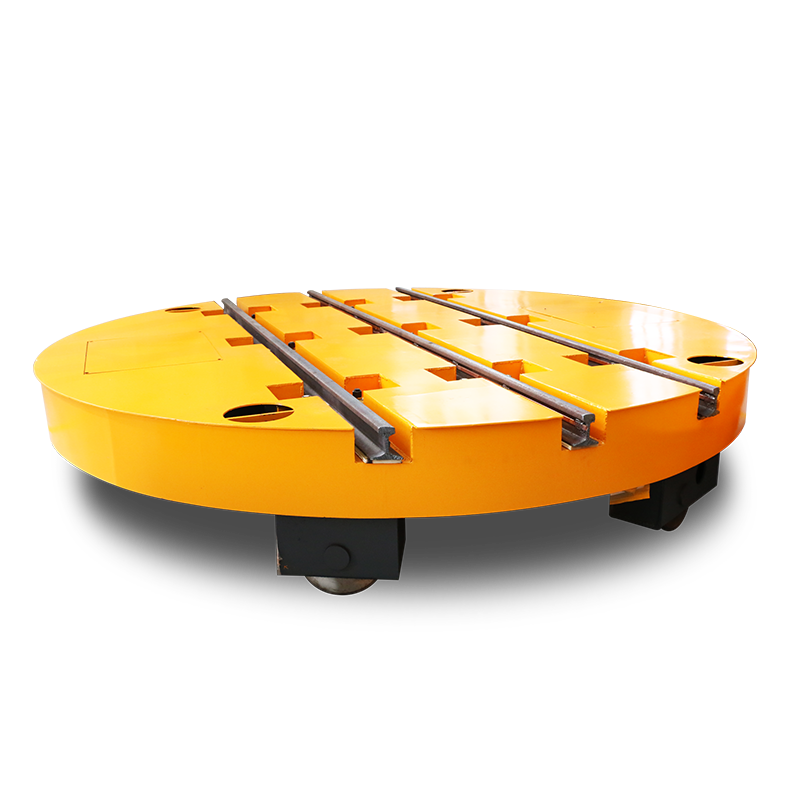
| Platform Options | Flat deck / Hydraulic lift / Scissor lift / Turntable / Coil saddle / Custom fixtures |
| Platform Size | Customized to load dimensions |
| Drive System | High-torque electric drive with industrial reducer |
| Acceleration & Braking | Smooth-start & soft-stop logic for load stability |
| Navigation Methods | Magnetic tape / QR code (vision) / Hybrid navigation |
| Positioning Accuracy | ±5–10 mm |
| Travel Speed (Loaded) | 0–30 m/min (adjustable) |
| Turning Capability | Straight travel / Steering / Zero-radius (design dependent) |
| Power Supply Options | Lithium battery / Lead-acid battery |
| Charging Methods | Manual charging / Fast charging / Automatic docking |
| Battery Management | Optional quick-swap battery drawer |
| Operating Time | Suitable for single-shift to 24/7 multi-shift operation |
| Safety Sensors | Front & rear LiDAR, side ultrasonic detection |
| Safety Functions | Obstacle detection, emergency stop bumpers, speed zoning |
| Warning System | Audible alarms, LED warning lights |
| Control System | PLC-based industrial control |
| System Integration | MES / WMS / Production line synchronization |
| Fleet Management | Multi-AGV coordination supported |
| Operating Environment | Indoor heavy industrial environments |
| Special Versions | Heat-resistant / Explosion-proof / Workshop-specific |
| Customization Scope | Load capacity, platform type, navigation, safety level |
Long-distance heavy-load transportation puts sustained pressure on the AGV’s drive motors. A conventional duty cycle is not enough—these vehicles must maintain torque output over extended periods without overheating or losing traction.
AOTENENG deploys:
High-torque industrial traction motors
Dual-drive or four-wheel drive configurations
Optimized heat dissipation channels
Heavy-grade reducers for load endurance
For AGVs exceeding 20 tons, four-wheel drive is often recommended to maintain directional stability and improve power distribution over long routes.
Heavy loads amplify every vibration, slope change, or minor obstacle on the factory floor.
An incorrect wheelbase can cause:
Load oscillation
Excessive frame stress
Increased energy consumption
Premature mechanical wear
For long-distance applications, AOTENENG engineers:
Extended wheelbases for smoother linear motion
Reinforced suspension modules to absorb load shock
High-durability polyurethane wheels or custom composite wheels
Load-balanced mechanical steering mechanisms when required
The goal is to ensure the AGV maintains stable rolling resistance and structural balance throughout its full travel path.
Navigation selection is one of the most critical configuration steps.
Recommended for long, predictable corridors and fixed-route applications with minimal layout changes.
Useful when the AGV must interact with multiple zones, buffering areas, and dynamic workstations.
Ideal for facilities that require both:
High route precision
Flexibility to adjust partial sections of the path
AOTENENG often configures hybrid navigation for heavy-load long-distance systems because it provides stability on straight paths and flexibility in high-traffic or complex zones.
High-capacity transport increases power demand. Selecting the right battery system ensures the AGV can complete long rounds without performance degradation.
AOTENENG offers:
High-capacity lithium packs with optimized discharge curves
Extended-range energy modules for multi-shift use
Automatic docking chargers at route endpoints
Quick-swap battery drawers for facilities running 24/7
Advanced BMS with thermal management
For multi-ton AGVs traveling several hundred meters per cycle, extended-capacity lithium batteries are strongly recommended.
Long travel routes reveal floor imperfections and slope variations that short-range equipment may never encounter. Heavy loads magnify these challenges.
AOTENENG’s motion system includes:
Adaptive torque compensation on slopes
Real-time wheel slip monitoring
Soft braking profiles for heavy momentum
Speed compensation in high-friction areas
This ensures consistent transport regardless of route length or floor condition changes.
A longer route increases the probability of encountering unexpected obstacles or human traffic. Therefore, the safety system must be extended and multi-layered.
AOTENENG configures long-distance Heavy-Duty AGVs with:
Multi-zone LiDAR (front, rear, and optional side)
Ultrasonic near-field protection
Automatic speed reduction in crowded zones
Intersection slowdown logic
Emergency-stop bumpers
Predictive route scanning before acceleration
Safety must be designed not just for the AGV—but for the entire pathway.
In long-distance logistics, more than one AGV often shares the same route. Without coordination, this can lead to congestion or inefficiency.
AOTENENG’s fleet management platform provides:
Traffic control and right-of-way logic
Route occupancy monitoring
Dynamic re-routing when paths are blocked
Battery-aware task scheduling
Automatic queue management at endpoints
These tools ensure uninterrupted operation and stable takt time across multiple shifts.
Long-distance movement increases the risk of load shift, especially for:
Long steel beams
Large plates
Off-center molds
Overlength tooling fixtures
AOTENENG supports custom engineering such as:
Extended platform decks
Mold/fixture locating pins
Coil cradles for steel rolls
Motorized turntables for alignment
Center-of-gravity optimized frame structures
This ensures that even on long straightaways or large turning radii, the load remains secure.
Configuring a Heavy-Duty AGV for long-distance, multi-ton operation requires a careful balance of engineering considerations—including drive architecture, navigation type, battery capacity, platform style, safety systems, and fleet logic.
AOTENENG’s Heavy-Duty AGV solutions are engineered with these challenges in mind, providing stable, predictable, and scalable transport for facilities with large footprints and demanding logistics requirements.
You have questions, comments or general inquiries? We value your suggestions. Drop us a line! Fill the form below just to say hi or to send us any questions or comments you might have.