
 English
 简体中文
简体中文Conveyor AGV Overview | Structure, Working Principles & Key Features

As manufacturers accelerate toward smart, data-driven production, automated material transfer has become a key factor in improving efficiency and maintaining consistent output. Among the many automation technologies available today, Conveyor AGVs stand out as one of the most practical and impactful solutions. These vehicles not only transport materials but also automate the handoff between workstations, machines, and conveyors—a crucial capability for continuous-flow production.
This article provides a clear and comprehensive overview of how a Conveyor AGV works, what components it uses, and why AOTENENG’s solutions are widely adopted across modern factories.
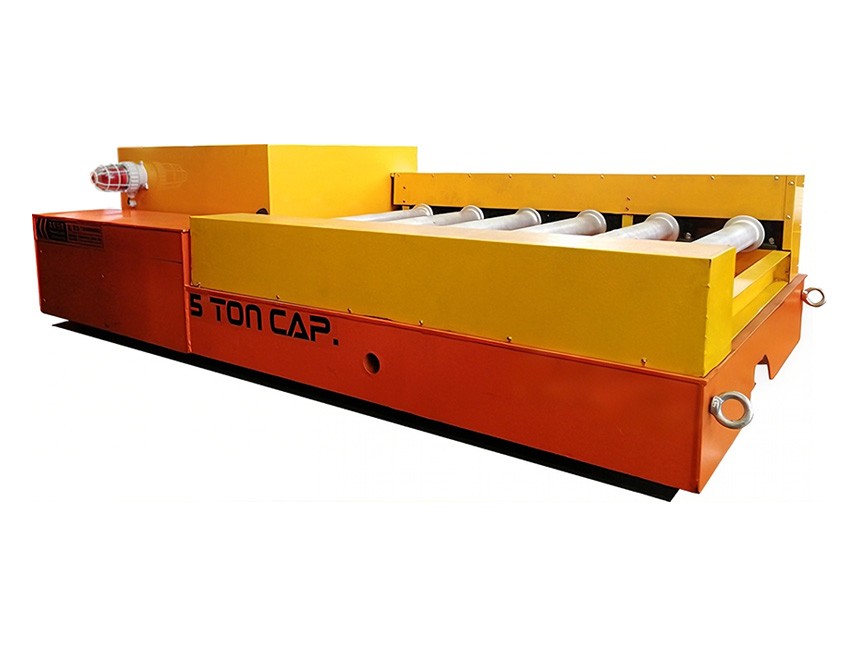
A Conveyor AGV is an Automated Guided Vehicle equipped with a built-in powered conveyor system—roller, belt, chain, or a customized configuration.
Its core purpose is to perform fully automated loading and unloading of materials without requiring human interaction.
This makes the Conveyor AGV ideal for:
Assembly lines
Machine-to-machine transfer
Robotic cells
Warehouse sorting
Packing and labeling lines
Cleanroom material movement
In short: it transfers, aligns, and hands off materials with consistent timing and precision.
(Specs can be customized based on workflow requirements)
| Item | Specification |
|---|---|
| Product Type | Conveyor Automated Guided Vehicle (AGV) |
| Primary Function | Automated material transport with built-in conveyor |
| Conveyor Types | Roller conveyor / Belt conveyor / Chain conveyor |
| Load Capacity | From bins & cartons to pallet-level loads |
| Transfer Method | Automatic loading & unloading (hands-free) |
| Docking Accuracy | ±10 mm |
| Navigation Options | Laser SLAM / QR-guided / Hybrid |
| Travel Speed | Adjustable to match production takt time |
| Operation Mode | Fully automated, multi-shift capable |
| Power Supply | Battery powered |
| Charging Options | Fast charging / Automatic docking / Battery swap |
| Control System | Industrial PLC-based control |
| System Integration | MES / WMS / PLC / Robotic cells |
| Safety System | 360° LiDAR, obstacle detection, speed zoning |
| Warning Devices | Audible alarms & LED indicators |
| Operating Environment | Production lines, warehouses, cleanrooms |
| Customization | Conveyor type, size, layers, load handling |
| Typical Applications | Assembly, packaging, sorting, line-side transfer |
AOTENENG Conveyor AGVs are built around an industrial-grade structure designed for reliability and accuracy. Key components include:
The backbone of the AGV.
Heavy-duty steel structure
Low vibration design
Anti-twist, high-rigidity frame
This ensures precise docking and long-term reliability even under continuous daily operation.
The conveyor is the heart of the system and can be customized to your workflow.
AOTENENG offers:
Motorized roller conveyors for bins, totes, cartons, and components
Belt conveyors for soft bags and lightweight goods
Chain conveyors for pallets or heavy-duty loads
Multi-level conveyors for multi-process transfer
Each conveyor is driven by an independent motor, allowing synchronized operation with external conveyors or machines.
Depending on the environment and required flexibility, AOTENENG supports:
Laser SLAM navigation for dynamic environments
QR/fiducial navigation for high-precision path control
Hybrid navigation combining multiple methods
These systems allow the AGV to move safely, intelligently, and accurately.
AOTENENG AGVs integrate:
360° LIDAR scanning
Ultrasonic sensors
Side and rear obstacle detection
Emergency stop buttons
LED and audible alarms
These ensure safe operation in mixed environments involving people, forklifts, and other AGVs.
Based on application needs:
High-efficiency brushless motors
Industrial wheels for stable traction
Long-life lithium battery packs or fast-charging stations
This allows 24/7 operation with minimal downtime.
Although every factory layout is different, the workflow of a Conveyor AGV typically follows this automated cycle:
The AGV receives tasks from:
MES / WMS
PLC or robotic cell
Central fleet management system
Manual order initiation
Tasks can be triggered by machine signals or process events.
The AGV navigates to the pickup or drop-off point using sensors and real-time mapping.
It adjusts:
Speed
Turning angle
Safety zones
To ensure smooth and safe movement through the facility.
When nearing the target station:
Positioning sensors refine the AGV’s alignment
Docking precision reaches ±10 mm
Conveyor heights match exactly with the station
This ensures reliable material exchange.
The built-in conveyor activates and transfers materials:
AGV → Machine/Conveyor
Machine/Conveyor → AGV
Depending on the direction and process requirements.
All of this happens automatically without manual intervention.
After delivery:
Status is updated to MES/WMS/PLC
The AGV receives the next job
Battery status and maintenance conditions are monitored in real time
This creates a fully autonomous and closed-loop workflow.
Precise alignment (±10 mm) ensures stable, repeatable material transfer.
Steel chassis and high-durability rollers keep performance stable under heavy workloads.
From conveyor type to load size to floor conditions—AOTENENG designs AGVs around your process, not the other way around.
AOTENENG AGVs communicate with each other to avoid congestion, optimize routes, and balance workload.
Supports fixed-route or dynamic SLAM environments, perfect for both new smart factories and existing lines.
Compatible with:
MES
WMS
Robots
Automated conveyors
Packaging equipment
Vision inspection systems
AOTENENG customers deploy Conveyor AGVs in:
Automotive & EV parts manufacturing
Electronics and semiconductor lines
Home appliance assembly
FMCG packaging
Food & beverage lines
E-commerce and high-speed sorting centers
Wherever repetitive material handoff is required, a Conveyor AGV dramatically increases consistency and output.
You have questions, comments or general inquiries? We value your suggestions. Drop us a line! Fill the form below just to say hi or to send us any questions or comments you might have.