
 English
 简体中文
简体中文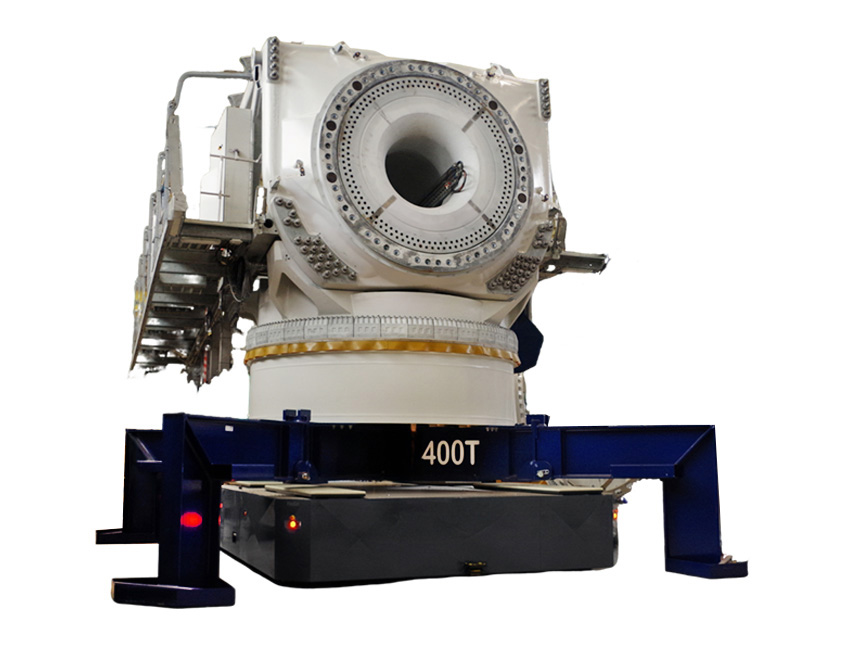
Why Material Transport is a Production Variable, Not a Fixed Cost
Manufacturing managers often treat material transport as a fixed cost of doing business—the expense of keeping materials moving through production is accepted rather than questioned. But transport operations are a variable process with significant performance differences between best and worst practice. Facilities that treat transport as a fixed function miss opportunities to improve production efficiency by improving how materials move. The connection between cart performance and production efficiency is direct: slow, unreliable, or inadequate transport capacity creates production bottlenecks that limit throughput regardless of how fast the production equipment itself operates.
Case 1: CNC Machining Center
A precision machining company operated 12 CNC machining centers producing aerospace components. Raw material was staged in a central storage area and transported to machining centers by a team of operators using manual carts. Completed parts were transported to inspection and then to finished goods. The transport process was consuming 20-25% of operator time, with operators spending significant portions of their shifts walking to storage, loading carts, and transporting materials rather than operating the CNC equipment that justified their wages.
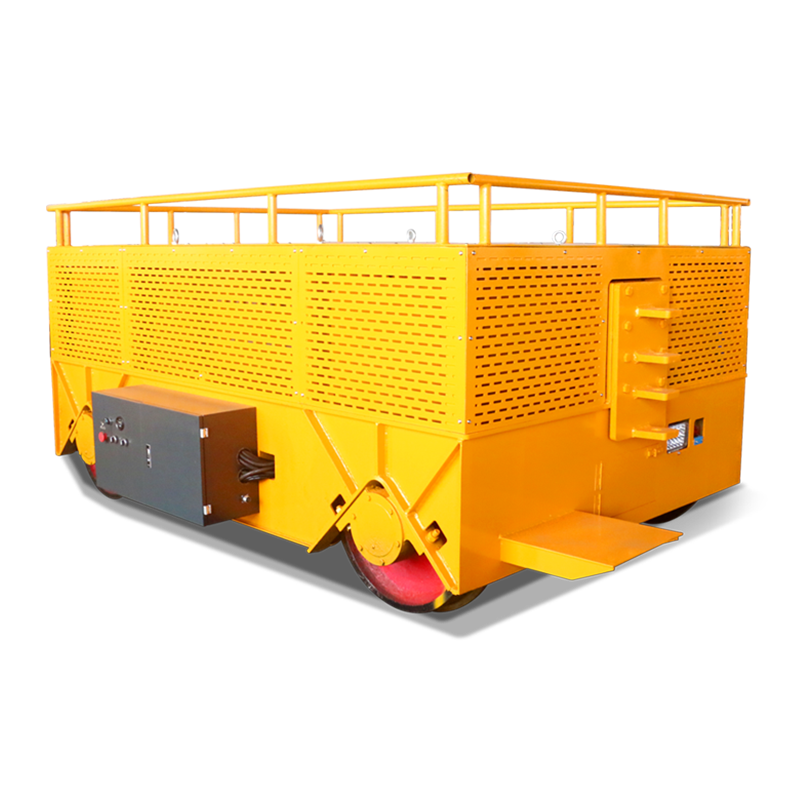
Electric transfer carts replaced the manual cart team, with two dedicated carts operating on a scheduled delivery and pickup route. Operators no longer left their machines to fetch materials—the carts delivered materials to each machine on schedule and collected completed parts for transport to inspection. Operator time at the CNC machines increased by an average of 18 minutes per shift. With 12 operators, this recovered 216 machine-minutes of operator time per shift that could be applied to additional machining. The facility increased throughput by 15% with the same equipment count, using the recovered operator time to run the machines more continuously.
Case 2: Pharmaceutical Packaging Line
A pharmaceutical packaging facility running three shifts struggled with production efficiency on its secondary packaging line—the line that applied labels, inserted patient information, and packaged products into final containers. The bottleneck was not the packaging equipment itself but the supply of components to the packaging stations. Component trays were delivered from a central warehouse on a schedule that did not match the actual consumption rate at each station, causing frequent line stoppages waiting for component availability.
The facility implemented electric cart delivery routes synchronized to the packaging line's actual component consumption. Each delivery cycle was timed to arrive at the packaging station before the station's component buffer was depleted, based on the line's current production speed. The cart scheduling system adjusted delivery frequency automatically when line speed changed during shift start-up or product changeover. Line stoppages from component shortages decreased by 85%, and the OEE for the packaging line improved from 68% to 79%—primarily through improved availability metrics that traced directly to the transport scheduling changes.
Case 3: Heavy Equipment Assembly
A construction equipment manufacturer assembled hydraulic excavators on a single assembly line with cycle time targets of 4.5 hours per unit. The line was consistently falling short of this target, with cycle times averaging 5.2 hours. Investigation revealed that the primary delay source was not the assembly operations themselves but the supply of component kits to each assembly station. Component kits—each containing the specific parts needed for one assembly step on one unit—were being assembled in a kitting area and transported to the line by forklift. Delays in kitting or transport caused the assembly station to run out of components before the next kit arrived, stopping the line.
The facility replaced the forklift transport with a dedicated electric cart system that maintained continuous circulation between the kitting area and the assembly line. Each station had a designated cart stop positioned for rapid kit exchange—the kit from the outgoing cart was already staged beside the station when the next cart arrived, so kit exchange could occur in under two minutes without the assembler leaving the station. The continuous circulation model ensured that a kit was always in transit or available, eliminating the zero-kit condition that caused line stoppages. Average cycle time decreased from 5.2 hours to 4.4 hours—below the original target—and the line achieved sustained throughput of 5.5 units per shift compared to the previous 4.2 units.
Case 4: Electronics Contract Manufacturing
An electronics contract manufacturer produced consumer devices with high product variety—over 200 different product SKUs with varying production volumes. The challenge was managing material flow for high-mix production where each SKU had different component requirements and production routing. Traditional fixed-route transport systems were designed for high-volume, low-variety production and could not adapt efficiently to the facility's actual operating model.
The facility implemented electric carts with dynamic routing—the carts received delivery assignments through a material transport management system that optimized route assignments in real time based on current production demands. When a high-priority order required accelerated component supply, the transport management system could reassign cart assignments to prioritize that order's material delivery. This dynamic allocation model reduced average material delivery time by 30% compared to the previous fixed-route system, and the transport management system's ability to track and prioritize delivery requests eliminated the production delays that occurred when materials arrived out of sequence with the production schedule.
Quantifying the Connection Between Transport and Production
The common thread across these cases is that transport efficiency directly affects production efficiency. In each facility, transport was a bottleneck that constrained production throughput, but because transport was treated as a support function rather than a production variable, the constraint was accepted rather than addressed. The measurement that makes the connection visible is Overall Equipment Effectiveness for the production line—specifically the availability component, which captures how often the line stops due to factors beyond its own equipment failures. When material supply causes line stoppages, the OEE data shows it, and the magnitude of the transport efficiency improvement shows in the OEE improvement.