
 English
 简体中文
简体中文
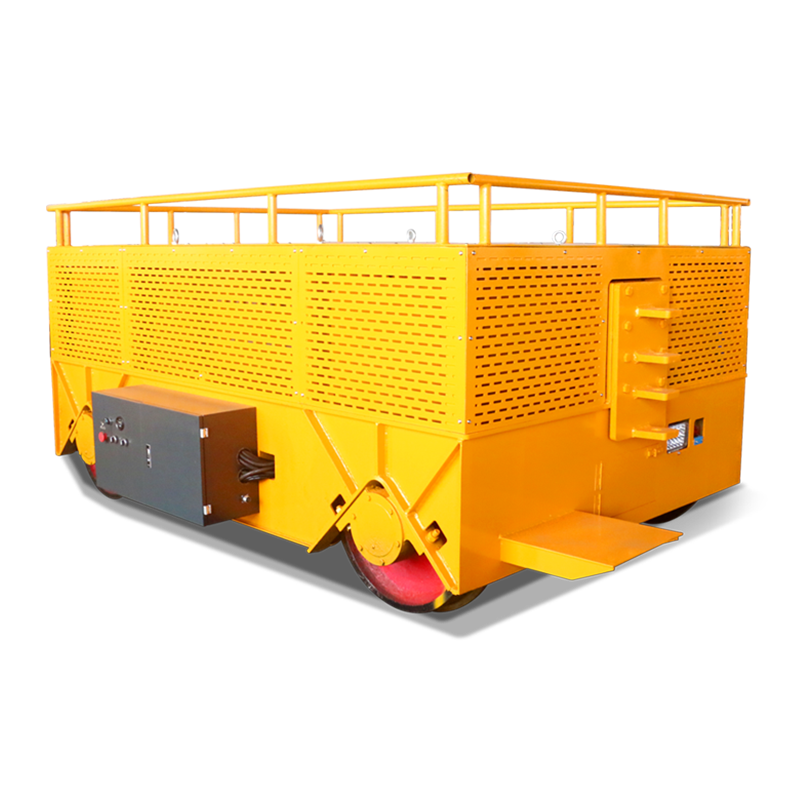
Why Choosing the Right Electric Flatbed Cart Matters
An electric flatbed cart is a significant capital investment that directly affects production efficiency, material flow costs, and operator safety in your facility. The wrong cart—underpowered, too small, poorly configured—creates daily frustrations that compound over years of operation. The right cart, selected after careful evaluation of your actual requirements, delivers reliable service for a decade or more with minimal maintenance cost and high operator satisfaction.
The buying process for electric flatbed carts is straightforward if approached systematically. Evaluate your actual operational requirements honestly, match those requirements to available cart configurations, verify the manufacturer's quality and support capability, and negotiate terms that protect your investment. This guide walks through each step with the specific criteria that matter for industrial electric flatbed cart selection.
1. Define Your Load Requirements First
Before looking at any specific cart models, document your actual load requirements in detail. Vague specifications like "we move heavy stuff" lead to carts that are either over-specified and overpriced or under-specified and unreliable. Specific, measured requirements lead to better buying decisions.
Weight and Load Specifications
Determine the maximum load weight the cart will handle in normal operation—not the theoretical maximum, but the heaviest load you expect to transport regularly. Then add a 25% safety margin to that number. If your heaviest regular load is 20 tons, specify a cart rated for at least 25 tons. Operating a cart continuously at or near its rated capacity accelerates component wear and reduces service life.
Beyond maximum load, consider the distribution of loads. Will loads be evenly distributed across the flatbed surface, or will they be concentrated in specific areas? Concentrated loads impose higher localized stresses that may require reinforced deck construction even if the total load is within the cart's rated capacity. Document the load distribution pattern and discuss it with the cart manufacturer during specification.
Deck Size and Load Geometry
The flatbed deck must be large enough to accommodate your largest load comfortably, with adequate margin for positioning variation and load securing. Measure your largest load dimensions and add a minimum of 150mm on each side for positioning tolerance. If loads vary significantly in size, consider whether multiple carts of different sizes make more sense than one large cart trying to handle everything.
Flatbed carts come in standard deck sizes, and customizing deck dimensions typically adds cost and lead time. Where possible, match your requirements to standard deck sizes. Where custom dimensions are unavoidable, get firm pricing and delivery commitments from the manufacturer before proceeding, as custom deck fabrication can be a significant cost driver.
2. Electric Drive System Requirements
The electric drive system—motors, controllers, batteries, and associated power electronics—defines the cart's performance characteristics and ongoing operating cost. Selecting the wrong drive configuration creates performance problems that cannot be corrected through operational adjustments.
Motor Power and Torque
Motor power requirements depend on the cart's weight capacity, the grade it must climb, and the required travel speed. Standard electric flatbed carts use DC motors ranging from 1.5 kW to 7.5 kW depending on capacity and performance requirements. Larger motors provide higher travel speeds and better grade-climbing ability but consume more battery capacity and add cost.
For most industrial applications, the relevant motor specification is torque rather than horsepower. High starting torque is critical for carts that must start and accelerate under load or on uneven surfaces. If your application involves frequent starts and stops, starts on grades, or operation on imperfect floor surfaces, prioritize motor torque over peak speed specifications.
Battery Type and Capacity
The choice between lead-acid and lithium batteries is one of the most consequential decisions in electric flatbed cart specification. Lithium batteries cost more upfront but deliver lower total cost of ownership over the cart's operational life in most intensive applications. Lead-acid batteries cost less initially but require more maintenance and have shorter cycle life.
Battery capacity—measured in ampere-hours (Ah) at the relevant discharge rate—determines how long the cart operates between charges. Calculate your daily energy requirement by multiplying your average travel distance per shift by the cart's energy consumption per kilometer, then add a 20% margin for unexpected extended use. Battery capacity that barely covers your daily requirement creates vulnerability to unexpected overtime demands or missed charging opportunities.
Opportunity charging capability matters for multi-shift operations. Lithium batteries support opportunity charging without the memory effects that affect nickel-cadmium batteries, allowing you to add charge during meal breaks or shift changes without reducing battery life. Lead-acid batteries should be given a full charge cycle between uses for maximum service life, making them less suitable for multi-shift operations without multiple batteries per cart.
3. Control Options and Operator Interface
How operators control the cart affects both productivity and safety. The right control configuration depends on your operation's layout, the distance operators travel with the cart, and the degree of control precision required at the load pick-up and delivery points.
Pendant Control vs. Remote Control
Pendant controls—cables connected to the cart with a handheld control station—are the lowest-cost control option and work well for fixed-route operations where the operator walks alongside the cart. The cable length limits the operating radius, and cable management becomes an issue in busy work areas. Modern pendant controls use low-voltage (24V-48V) circuits for operator safety.
Radio remote controls offer greater operating radius and eliminate cable management concerns. They add cost for the transmitter and receiver hardware but are well worth the investment for operations where the operator frequently boards and exits the cart, where the operating area has obstacles that could damage pendant cables, or where a single operator needs to manage multiple carts from a single control station. Replace remote batteries monthly and keep spare batteries charged—battery failure in the remote is a common cause of unexpected cart downtime.
Integration with Facility Systems
For operations that use warehouse management systems (WMS) or manufacturing execution systems (MES), some cart manufacturers offer integration options that allow cart dispatch, position tracking, and status reporting through the facility's existing software systems. Integration requires additional configuration and testing during commissioning but enables significant productivity improvements for high-volume operations through automated load tracking and optimized cart dispatching.
4. Safety Features and Compliance
Electric flatbed carts operate in environments where they share space with pedestrians, forklifts, and other material handling equipment. Safety features that prevent collisions, protect operators, and maintain control in emergency situations are not optional—they are requirements for any serious industrial buying specification.
Essential Safety Features
Every electric flatbed cart should include an emergency stop button accessible from the operating position, a horn or audible warning device for pedestrian alerting, dead-man switches that stop the cart if the operator leaves the control station, and a parking brake that holds the cart on any grade it is rated to operate on. Beyond these basics, additional safety features worth specifying include proximity sensors or cameras for blind corner operation, automated speed reduction in pedestrian areas, and collision avoidance systems for high-traffic zones.
Compliance with applicable safety standards—ANSI/ASSE B56.1 for powered industrial trucks in the US, EN 1526 in Europe, or equivalent local standards—is a baseline requirement. Carts that meet or exceed these standards carry appropriate third-party certification. Request the manufacturer's compliance documentation and verify it covers your specific application and jurisdiction.
5. Quality Indicators and Supplier Evaluation
Cart quality varies enormously between manufacturers, and the lowest-priced cart is rarely the best long-term value. Quality indicators to evaluate include weld quality on the structural frame, wheel bearing seals and preload adjustment, motor and gearbox quality and manufacturer sourcing, controller brand and programming documentation, and paint system quality and corrosion protection for the operating environment.
Visit the manufacturer's facility if possible before committing to a purchase. What you observe there—their manufacturing processes, quality control procedures, component storage practices, and the competence of their engineering team—provides insight into the quality of the cart you will receive that no sales brochure can match. If an in-person visit is not feasible, request references from operations with similar applications and follow up with those references directly.
6. Total Cost of Ownership Beyond the Purchase Price
The purchase price of an electric flatbed cart typically represents only 40–60% of its total cost of ownership over a 10-year operational life. The remaining costs—battery replacement, regular maintenance, repair parts, downtime during repairs, and eventual equipment disposal—should factor into your buying decision from the beginning.
Request the manufacturer's projected maintenance costs for your specific application. A cart that costs 10% more to purchase but requires 30% less maintenance over its operational life delivers better total value. Battery replacement is typically the largest single maintenance cost item for electric carts—factor in the battery replacement cost and cycle when comparing carts with different battery specifications.
7. Negotiating the Purchase
Once you have identified the right cart configuration and evaluated suppliers, the negotiation phase offers opportunities to improve the value of your purchase beyond the base pricing. Request extended warranty coverage—many manufacturers will extend warranties without additional cost when negotiating larger orders. Ask about preventive maintenance program pricing and whether the first scheduled maintenance can be included at no additional charge. Negotiate spare parts packages: manufacturers often offer meaningful discounts on initial spare parts orders placed with the cart purchase. Clarify the commissioning and operator training scope and confirm whether these services are included in the quoted price or billed separately.