
 English
 简体中文
简体中文
The Power Question That Changes Everything
The choice between battery-powered and cable-powered transfer carts is one of the foundational decisions in material handling system design, and it has implications that extend through every aspect of system performance, operating cost, and facility design. The decision is not simply a technical specification—it is a statement about how the facility intends to operate, what operational constraints it is willing to accept, and how it prioritizes flexibility versus predictability in its material handling operation.
Understanding the Cable Option: When Tethered Operation Makes Sense
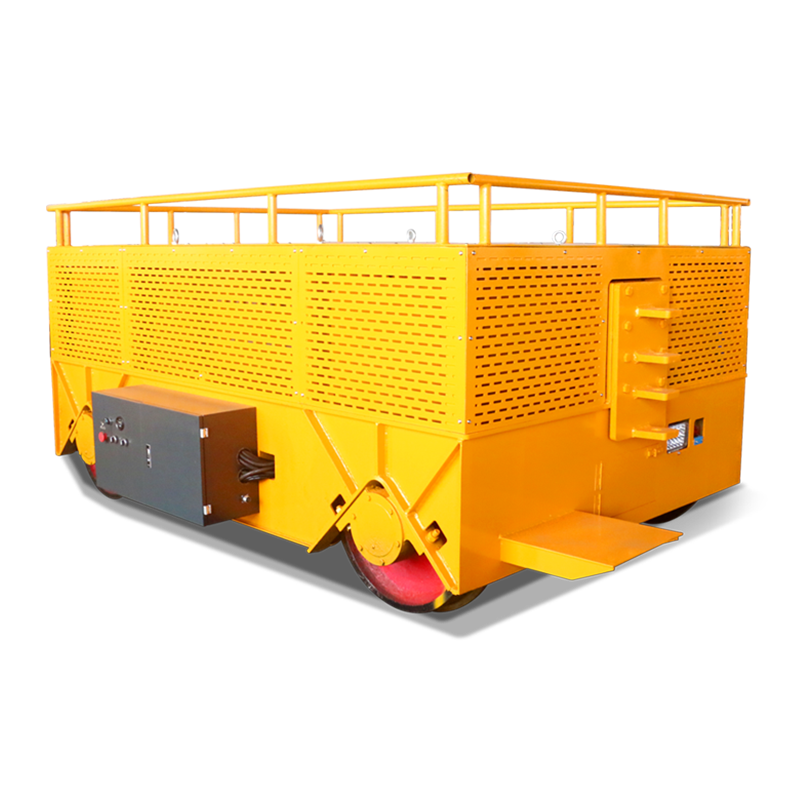
Cable-powered transfer carts—also called cable reel carts or festoon carts—receive their operating power from an external electrical supply through a flexible cable that is wound on a spring-loaded reel mounted on the cart. As the cart travels away from the power source, the cable unreels; as the cart returns, the reel retracts the cable. This arrangement provides theoretically unlimited continuous operation without the need for battery charging, which is an advantage in applications where the cart must operate continuously for long periods.
The cable-powered approach has significant limitations that are often underestimated in the initial system design. The cable constrains the cart's travel range to the length of the cable; beyond the cable's reach, the cart cannot operate. This means that the facility must be designed with power sources located at the points where carts need to operate, which may require electrical infrastructure investments. The cable itself is a maintenance item: the cable wears at the flex points as it wraps around the reel, and the reel mechanism requires periodic maintenance. Cable tangling is a failure mode that can create safety hazards if the cable comes into contact with cart wheels or other components. And the cable limits the cart's maximum travel speed because the cable must be managed during travel—the cable reel cannot keep up with high-speed cart movement without causing cable damage or reel mechanism stress.
Battery Power: The Case for Untethered Operation
Battery-powered transfer carts operate independently of fixed power infrastructure, which is the fundamental advantage that drives the widespread adoption of battery power in material handling applications. A battery-powered cart can travel to any point within the facility, on any route, without being constrained by cable length or power source location. This flexibility allows the facility to use carts for transport tasks that would be impractical or impossible with cable-powered equipment, and it allows the facility to reorganize material flow patterns without needing to modify electrical infrastructure.
The battery is both the source of this flexibility and the primary constraint on battery-powered cart operation. Battery capacity—the amount of energy the battery can store—determines how long the cart can operate between charges. As the battery discharges, its available capacity decreases, and at some point the battery must be recharged or replaced to continue operation. The frequency of this charging requirement depends on the battery capacity, the cart's energy consumption rate, and the utilization level of the cart. High-utilization applications—where the cart operates continuously throughout a shift—typically require opportunity charging (brief charging periods during breaks, shift changes, or other natural pauses in operation) to maintain charge levels through the entire operational period.
Battery Technology: The Critical Variable in Battery-Powered Performance
The performance characteristics of battery-powered transfer carts depend heavily on the battery technology used. The two dominant battery chemistries in current use are lead-acid and lithium-ion, with lithium-ion gaining market share rapidly due to its superior performance characteristics in most respects. The key performance differentiators are energy density (how much energy can be stored per unit of battery weight and volume), cycle life (how many charge-discharge cycles the battery can survive before its capacity degrades below a usable threshold), charging time (how long it takes to restore full charge after discharge), and round-trip efficiency (what percentage of the energy put into the battery during charging is actually available during discharge).
Lithium-ion batteries outperform lead-acid batteries on all four of these metrics by significant margins. They have higher energy density, meaning they can store more energy in the same space and weight; longer cycle life, meaning they last longer before requiring replacement; faster charging, meaning less downtime for the cart during charging; and higher round-trip efficiency, meaning less energy is lost during the charge-discharge cycle. The primary disadvantage of lithium-ion batteries is their higher initial cost. However, the total cost of ownership over the battery's life typically favors lithium-ion because of the higher effective capacity, longer life, and lower energy losses that lithium-ion provides compared to lead-acid.
When Cable Power Is Still the Right Choice
Despite the advantages of battery power, cable-powered carts remain the right choice in specific applications where their specific characteristics provide advantages that battery power cannot match. The primary application where cable power is still commonly used is in very high-power applications—carts that require continuous power delivery at levels that would drain batteries quickly or require batteries too large to be practical. Carts with heavy power loads—welding equipment, heating systems, high-power process equipment mounted on the cart—fall into this category. The continuous power requirement makes battery operation impractical, and cable power provides the necessary energy without the battery limitations.
The second application category is in facilities where the travel range is fixed and short, where the cable infrastructure already exists, and where the operational flexibility advantage of battery power is not relevant. Some older facilities were designed with cable-powered transport systems that are integrated into the facility infrastructure; retrofitting these systems to battery-powered carts would require facility modifications that may not be economically justified. In these cases, the cable system continues to provide adequate service even though it is technically inferior to modern battery-powered alternatives.
The Hybrid Approach: When Split Power Sources Makes Sense
For facilities with mixed transport requirements—some tasks where cable power is advantageous and others where battery power is required—the most effective approach may be a hybrid system: some cable-powered carts for the high-power, fixed-route applications, and some battery-powered carts for the flexible transport tasks. This approach captures the specific advantages of each power source while managing their respective limitations. The challenge is in the system integration: the two types of carts must be coordinated through a common fleet management system, and the facility must have the infrastructure to support both types (cable power distribution and battery charging stations).